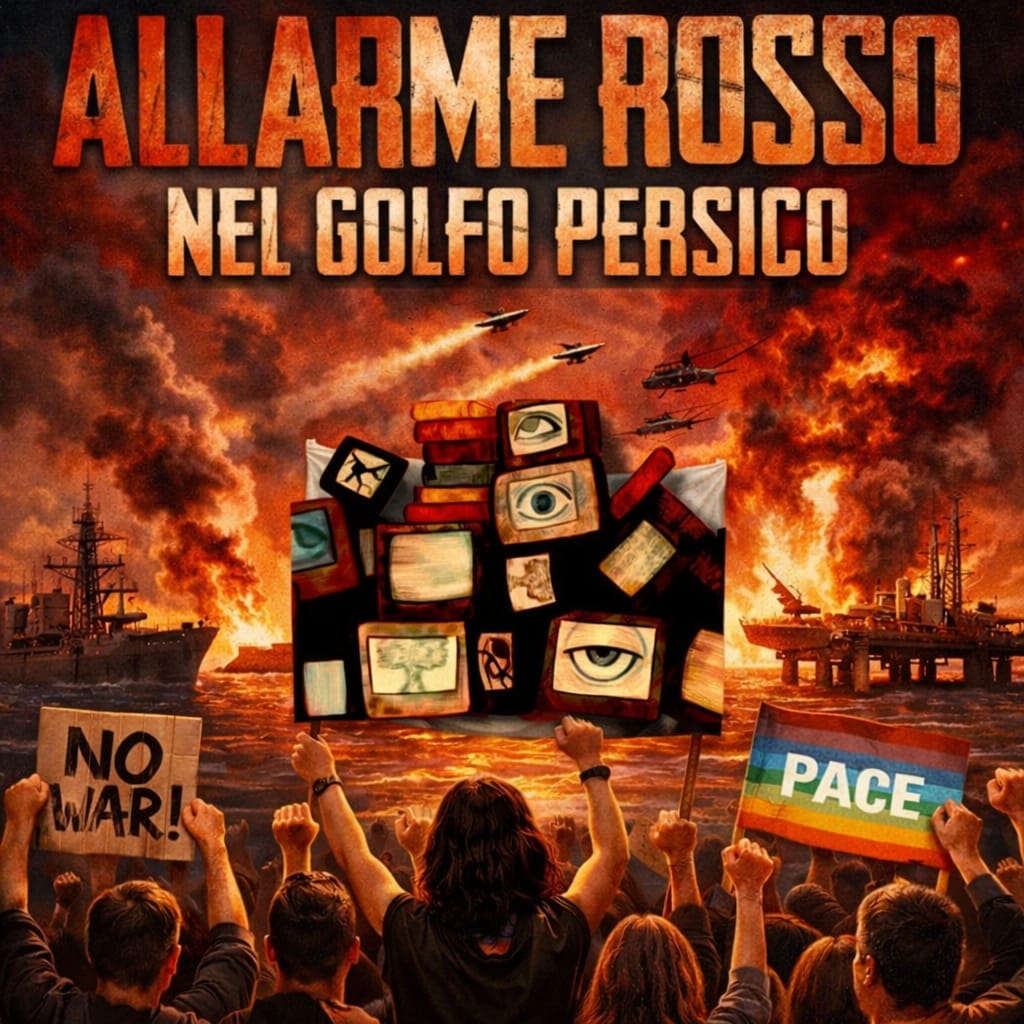
Led by vocalist Nunzio Ciccone — whose delivery carries the particular gravity of a man who has been saying something important for thirty years and is still not sure the room is listening — the band marshals its forces with impressive control. Guitarist Andrea Palazzo brings a muscular, unadorned quality to the arrangement, the kind of playing that refuses to aestheticise violence or wrap geopolitics in comfortable reverb. Bassist Vincenzo Esposito grounds everything in something bodily, unavoidable, like a hand pressed flat against a chest. DJ and producer Claudio Ciccone Bros, meanwhile, handles the connective tissue with a deftness that keeps the track contemporary without diluting its origins. This isn't a record that has been polished into submission; it's been renewed.
The mastering, handled by New York's MisterAC, deserves specific mention. The transatlantic collaboration is fitting for a song about the internationalisation of conflict — and the result is a sonic profile sharp enough to cut through the ambient noise of contemporary playlisting. Nothing here is buried; every element insists upon itself. Whether that constitutes a political statement or simply good engineering is, perhaps, a distinction without a difference.
What the track does with remarkable economy is refuse the comfortable distance that the passage of time usually affords. Most songs about historical events allow the listener to occupy a position of retrospective sadness — a kind of safe mourning. *Allarme Rosso* forecloses that option entirely. The anger encoded in its structure feels present tense, not past. Ciccone's voice doesn't describe a crisis; it inhabits one. The production supports this refusal: there are no vintage markers deployed to anchor the track in 1991, no deliberate sonic archaeology that would allow the listener to say *ah yes, that was then*. The decision is unambiguous and correct.
The artwork — the product of a collaboration between Frankie Esposito, Idkhowbut_art, and Cloud Scicc — carries this argumentative weight into the visual realm. It is striking in a way that packaging often fails to be: not decorative, not merely illustrative, but genuinely confrontational. In a cultural landscape where album art has been reduced to a thumbnail competing for fractional seconds of attention, the image here demands something closer to a sustained look.
One might reasonably ask whether the revival of a thirty-five-year-old protest song constitutes artistic courage or rhetorical convenience. The honest answer is: both, and this is not necessarily a criticism. Fiori del Male are not pretending the song was written yesterday, nor are they pretending that the world it describes has substantially improved. The dual temporality is, in fact, the entire point. By releasing *Allarme Rosso nel Golfo Persico* now, they are making an argument about continuity — about the way certain human failures recur not because they are inevitable but because they are permitted, generation after generation, by our collective willingness to move on.
This is not comfortable music. It is not designed to accompany a morning commute or populate a dinner party. It is designed — with evident seriousness and considerable craft — to make you uncomfortable in the specific way that art about real things makes you uncomfortable: by refusing to let you off the hook. Fiori del Male have been at this for over three decades. They know exactly what they are doing.
*Allarme Rosso nel Golfo Persico* is available now on all major digital platforms.