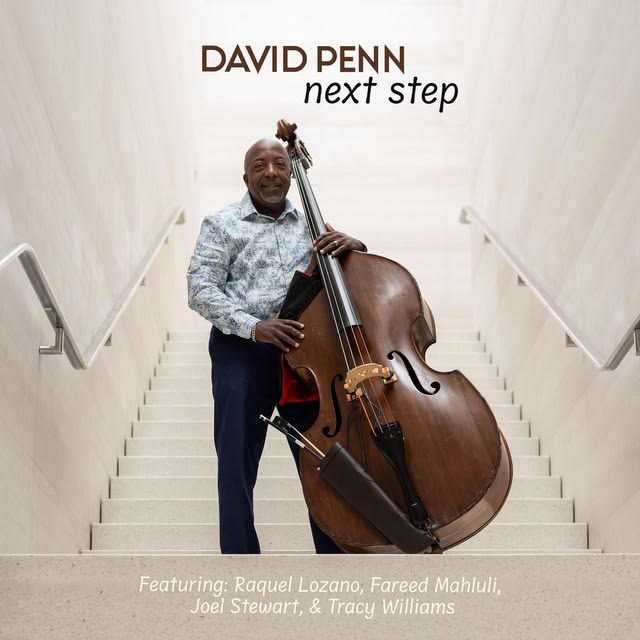
Recorded under Penn's own CreativeTone imprint and arriving as the follow-up to 2024's *Back On Track*, this fourteen-track, ninety-six minute set is not an album that announces itself with fanfare. It opens, instead, with the understated authority of a musician who has long since stopped needing to prove anything. The title track establishes the parameters early: a bass-led groove of considerable elegance, the rhythm section locking with the kind of ease that only comes from musicians who have genuinely listened to one another. Penn's own playing throughout is a model of compositional restraint — he is rarely the loudest voice in the room, which makes the moments when he steps forward all the more striking.
"Moving Ahead" and "Sunrise" form a natural brace early in the running order, both riding a calm, reflective current that feels less like background music and more like a particular quality of light — late afternoon, windows open. The arrangements are spacious enough to let the music breathe rather than rushing, and the sense of storytelling is strong even where lyrics are not the primary vehicle. This is a fundamentally important distinction in jazz, and Penn understands it intuitively: the narrative is encoded in the phrasing, the dynamics, the silences between phrases.
"See You At Five" is one of the record's most immediately winning moments — a track with a relaxed, almost cinematic groove that conjures the specific pleasure of a day's work done, the commute home, the city slowing down around you. "The Drive Home" later in the sequence operates on similar emotional coordinates, and the pairing suggests a deliberate thematic architecture running beneath the album's apparently casual surface. Penn is, it turns out, a more considered arranger than a first pass might reveal.
The collaboration with musicians including Raquel Lozano and Fareed Mahluli introduces a welcome variety of texture across the album's considerable length, preventing the inherent risk of any ninety-minute jazz record — that homogeneity eventually dulls the ear. "My One and Only Love" leans into a tenderness that suits Penn's ensemble beautifully, while "His Grace and Glory", the closing track, wraps things up with a spiritual warmth that feels entirely earned rather than imposed.
Penn's long break from his musical career and his subsequent return to Atlanta, where he rebuilt his practice through local collaborations before founding CreativeTone, gives this music a particular quality of hard-won presence. He is not a young musician making ambitious declarations about what jazz might become. He is a mature artist making lucid, warm, deeply felt statements about what jazz already is, and what it has always been at its finest: a language built on listening, on restraint, on the understanding that the most elegant line is usually also the most honest one.
*Next Step* is precisely that — a step forward, taken with quiet confidence and a bassist's fundamental knowledge that the most important job is to hold everything together while everyone else plays.