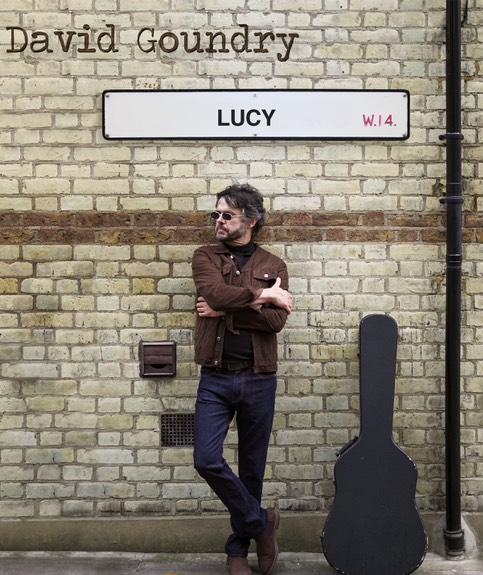
This is, unmistakably, a record steeped in the amber of the late 1960s. The Beatles loom large — impossibly, unavoidably large — over every chord change and melodic phrase. But to dismiss *Lucy* as mere pastiche would be to do Goundry a considerable disservice. The man isn't cosplaying Lennon or McCartney; he's conversing with them, conducting a dialogue across sixty years of popular music history with the quiet confidence of someone who has done the listening and earned the right to pick up the thread.
Recorded at Rooster Recording Studios in West London — a room that has witnessed everything from 80s pop glory to contemporary sessions since its doors opened in 1983 — the track carries the warmth of analogue tape in its very bones. Producer Nick Sykes, a veteran whose credits stretch back to working with the Average White Band in the 1970s and who later shaped the polished sound of Go West, brings an almost architectural sense of proportion to the production. Nothing is accidental here. The reverbs breathe. The guitars shimmer rather than crunch. The low end settles like a well-worn leather armchair rather than demanding attention. Sykes has been around long enough to know that restraint is its own form of power, and *Lucy* is all the richer for his seasoned hand.
The centrepiece of the track — aside from Goundry's own melodic instincts, which are sharp and unfussy — is the contribution of backing vocalist Joanna Griggs. Her voice introduces a genuinely haunting quality to the proceedings, weaving around Goundry's lead with the kind of effortless, spectral poise that recalls the best of the baroque pop tradition: think Marianne Faithfull's softer moments, or the female harmonies that ghosted through the back catalogues of Small Faces and early ELO. Griggs does not merely complement the track; she elevates it into something genuinely transportive.
The Small Faces and ELO are cited by Goundry himself as touchstones alongside the Beatles, and the influence is palpable — particularly that ELO instinct for layering orchestral colour into rock architecture, for making the grandiose feel intimate rather than bombastic. *Lucy* doesn't overreach. It simply reaches, with precision.
Following his album *Glazbury Rd*, this single signals a genuine and intriguing creative pivot for Goundry. He is leaning into something rawer and more romanticised than his previous work, and the conviction with which he commits to that vision is infectious. *Lucy (Remix 2026)* is the sound of a songwriter finding a new gear — and discovering, to no one's surprise but perhaps his own, that it suits him rather well.
The past, handled with this much care, never really sounds old. It sounds inevitable.