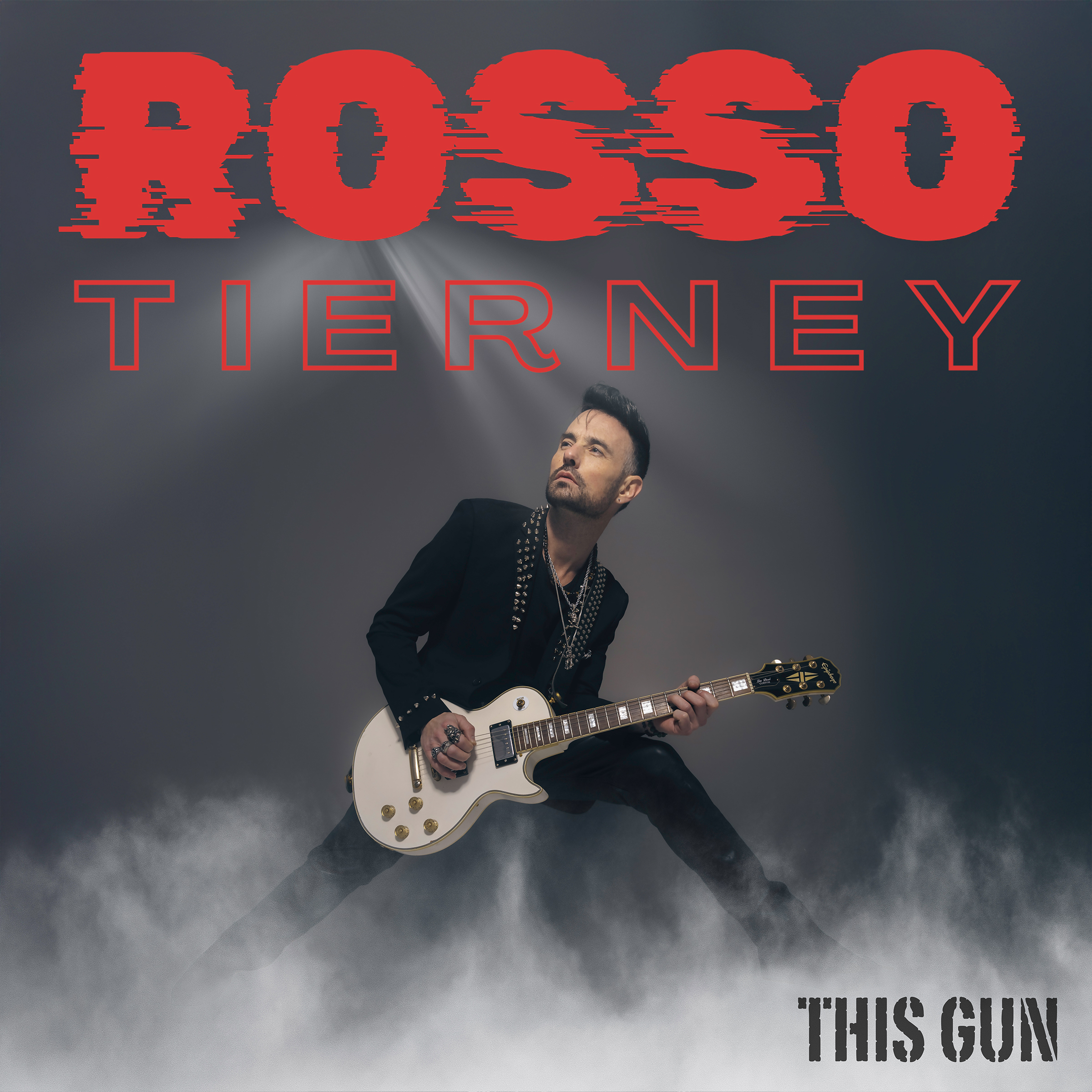
"This Gun," the Manchester-adjacent artist's latest single, arrives like a fist through drywall: sudden, forceful, and leaving a mark you hadn't quite anticipated. From the opening volley of down-tuned guitars, Tierney makes his intentions abundantly clear. This is not background music. This is not something to be filed quietly into a Spotify playlist while you answer emails. This is music that demands your full attention, grabs you by the lapels, and refuses to let go until it has had its say.
The track's conceptual backbone is the inner life of a soldier — that impossible psychological terrain between the moment of action and the acceptance of consequence. It is rich, perilous subject matter, the kind that lesser songwriters reduce to cliché and bombast, all crashing cymbals and meaningless bravado. Tierney navigates it with considerably more intelligence. The song concerns itself not with the spectacle of warfare but with its intimacy: the memories that flood the mind, the faces of loved ones that surface unbidden, the peculiar democracy of regret that strips every human being, however hardened, down to their essential vulnerability.
The production is muscular without being suffocating. Heavy guitars anchor the track with genuine menace, and the drumming — thunderous, propulsive — functions less like a rhythm section and more like a second heartbeat, insistent and slightly too fast, the physical sensation of adrenaline rendered in sound. Yet beneath all of this noise, the arrangement breathes. Tierney understands the first law of heavy music: dynamics are everything. The moments of relative quiet do not undercut the aggression; they amplify it, lending the eventual crescendos the quality of inevitability rather than mere volume.
His vocal performance deserves particular attention. Tierney sings with the kind of rawness that cannot be manufactured in post-production — a voice that sounds as though it carries genuine acquaintance with the material, whether that acquaintance is literal or imaginative. He sits comfortably in the lineage of artists like Ozzy Osbourne and the Foo Fighters' Dave Grohl, yet resists imitation, maintaining a distinctiveness that marks him as a songwriter with his own particular vantage point on the world.
The wider metaphor — that all human lives contain their own private wars, their own moments of near-dissolution and subsequent reconstruction — lands without feeling forced. This is partly a matter of craft, the lyrical imagery specific enough to feel observed rather than invented, and partly a matter of conviction. You believe Rosso Tierney when he sings this. Credibility of that kind is not taught; it is earned.
The music video, which complements the single's release, leans into the track's cinematic ambitions. Tierney has spoken about his background as both musician and visual artist, and that dual sensibility is evident throughout — the imagery atmospheric and deliberate, each frame composed with the same attention to emotional weight that characterises the song itself. It does not simply illustrate the music; it extends it, offering a parallel text that rewards careful watching.
What "This Gun" ultimately provides is something the British rock landscape has been quietly crying out for: a heavy track with something genuinely at stake. Not darkness for its own sake, not aggression deployed as aesthetic choice alone, but real emotional risk taken in pursuit of real emotional truth. The question Tierney poses — what do we carry forward, and what do we leave behind — is ancient, universal, and entirely unanswerable. The fact that he has found a way to make it feel urgent again is no small achievement.
File alongside: Foo Fighters at their most unguarded, Asking Alexandria at their most melodic, and something that belongs entirely to Rosso Tierney alone.