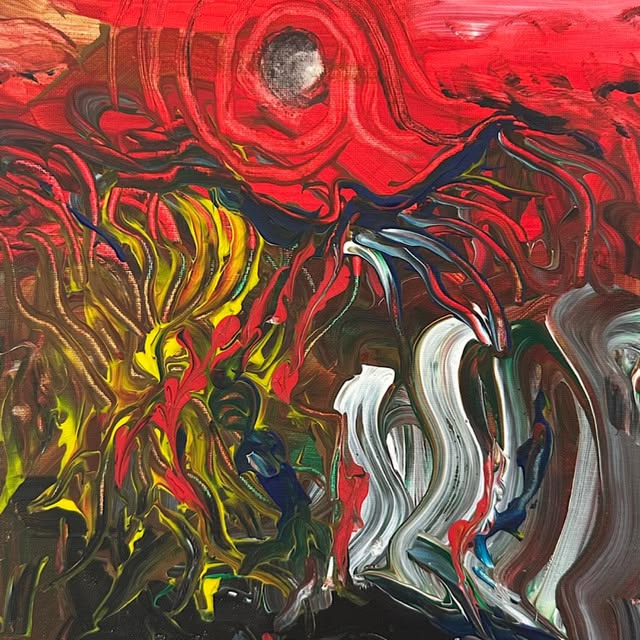
The single arrives stripped down to its essential elements, deliberately courting the raw authenticity of Dylan's early Columbia recordings. This isn't mere cosplay; Michellar understands that the lo-fi aesthetic serves the material. When addressing subject matter as weighty as warfare and human cruelty, over-production would feel obscene. The spartan arrangement—presumably just voice and acoustic guitar, though the press materials remain coy on specifics—forces the listener to reckon with the lyrics' emotional directness without the safety net of sonic embellishment.
Michellar's stated influences—Dylan, naturally, but also John Lennon's "Imagine"—cast long shadows over the proceedings. The invocation of these canonical protest songs could have proven suffocating, yet she demonstrates enough songwriter's craft to carve out her own territory. Where Lennon painted utopian visions and Dylan wielded prophetic fury, Michellar stakes her claim on the precarious balance between despair and optimism. Her central thesis—that hope remains "the one keel that will keep us from our own destruction"—might risk sounding platitudinous in less capable hands, but the conviction in her delivery (one assumes, given the emotional investment detailed in her artist statement) should carry it across the line.
The Haight-Ashbury nostalgia that permeates this track and the forthcoming "Homegrown" EP represents both the song's greatest strength and its potential weakness. That Summer of Love idealism, filtered through six decades of historical disappointment, can feel either poignant or naive depending on the day's headlines. Michellar seems aware of this tension; her focus on the "opposite polarities of human character" suggests a worldview more complex than simple flower-power revivalism. The war she's chronicling isn't some distant abstraction but a very real conflict that has displaced millions and redrawn the geopolitical map.
The collaborative process with Robi Bean, recorded at his El Cerrito studio, apparently yielded the kind of creative chemistry that can't be manufactured through file-sharing and email chains. Michellar's description of their work together—"a feeling of mutual love for the process"—hints at a creative partnership that should bear watching as the full EP materializes later this summer.
The decision to present this as an "acoustic remix" rather than simply an acoustic version raises intriguing questions about the song's original form. Has Michellar stripped away electric elements, production flourishes, or additional instrumentation to arrive at this austere presentation? The choice of "remix" as nomenclature feels almost perverse given the traditional associations with electronic music and club culture, yet perhaps that's precisely the point—reclaiming the term for a different kind of deconstruction.
As a preview of "Homegrown," with its promised five tracks of Bay Area-produced acoustic material, "LOVE PEACE WAR" functions admirably. The other song titles—"Daffodils," "Wildflower," "The Message"—suggest a thematic coherence rooted in natural imagery and direct communication. Whether Michellar can sustain this aesthetic across an entire EP without falling into period pastiche remains to be seen.
The closing invocation of Rumi—"Where there is ruin, there is hope for a treasure"—frames the endeavour aptly. Michellar has sifted through the rubble of contemporary global conflict and emerged with something worth preserving: a reminder that the folk tradition, properly wielded, can still cut through the noise and name our present moment's anxieties. The single won't change the world, but it might just help us understand why that world so desperately needs changing.