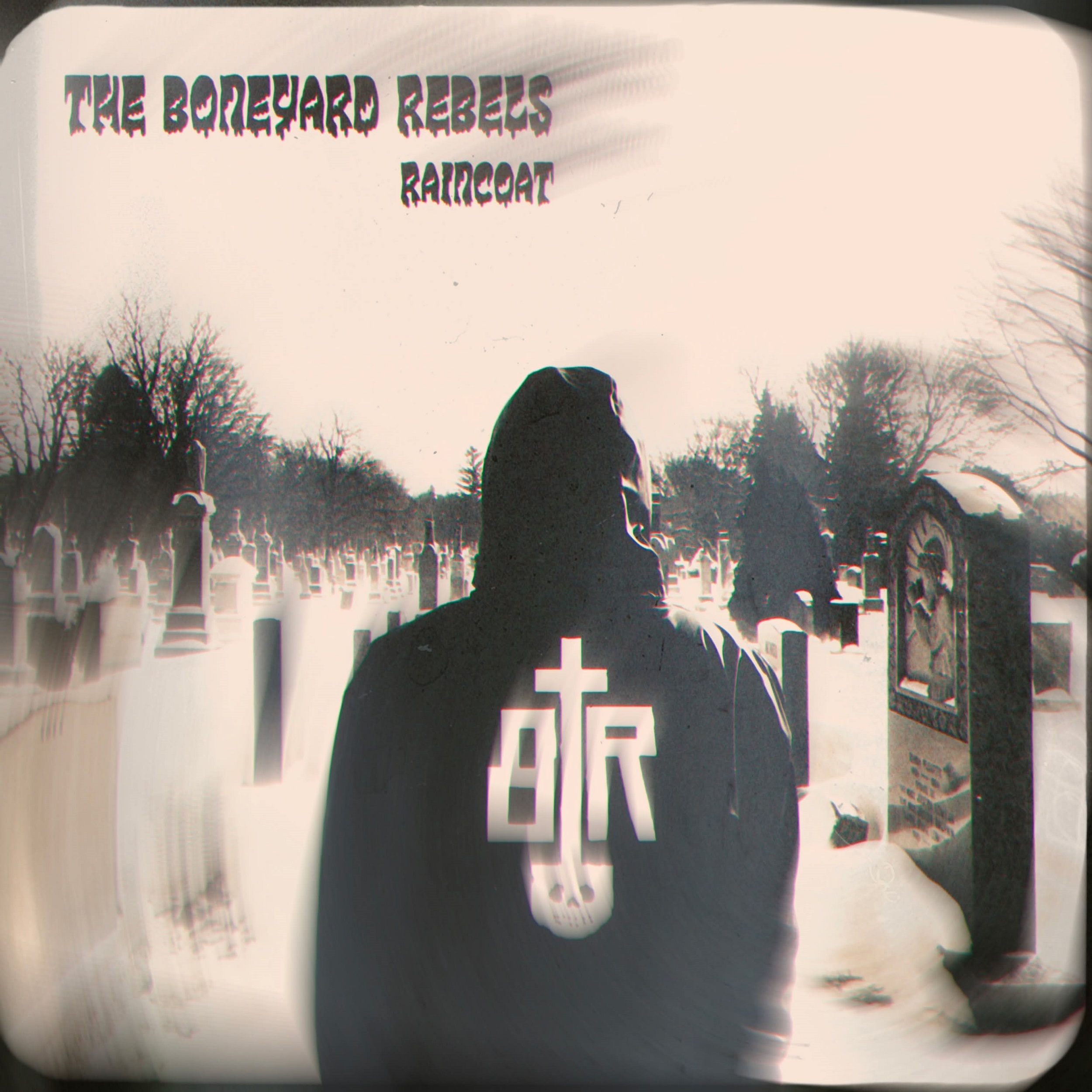
The track announces itself with a guitar line that possesses the angular, serrated quality we've come to expect from disciples at the altar of Idles and Pixies—those twin poles of the controlled tantrum. Eric Dumoulin's guitar work carves out space with the precision of a man accustomed to digging six-foot holes, while Ezra Sheppard's complementary fretwork adds texture rather than simply doubling down on the riffage. It's an approach that recalls the Black Francis school of composition: economical, violent, oddly melodic.
Billy Tsekeris's synth work deserves particular attention. Rather than draping the proceedings in the sort of atmospheric wash that's become de rigueur among post-punk revivalists, the keyboards here jab and punctuate, lending proceedings an uneasy, almost industrial edge. Combined with Diego Antonio Lobatón's drumming—propulsive without being showy, tight as a coffin lid—the rhythm section provides a foundation that's both sturdy and unsettling.
Dumoulin's vocal delivery occupies that sweet spot between Joe Talbot's hectoring intensity and the more detached, almost deadpan approach favoured by certain 1980s progenitors of this sound. The central image—wearing a raincoat on a sunny day—functions as both absurdist declaration and metaphor for self-imposed isolation, for being perpetually prepared for disaster even when none appears imminent. It's the kind of detail that elevates "Raincoat" beyond mere style worship.
The production, courtesy of Steeven Choinard with mastering by Francis Ledoux, captures the band's claim that this represents their best-sounding effort to date. Recorded in a single day in their usual Thursday night rehearsal space, the track manages to sound both immediate and considered. The mix allows each element its moment without descending into the murky soup that often afflicts bands attempting this particular sonic palette.
What rescues "Raincoat" from being merely competent genre exercise is its commitment to instinct over calculation. The band's insistence on their working-class gravedigger identity—whether literal truth or elaborate conceit—informs the music with a sense of physical labour, of ideas hewn rather than workshopped. The result feels refreshingly free from the cloying self-consciousness that plagues so many contemporary guitar bands desperately trying to convince us (and themselves) of their authenticity.
The band's reference point of creating "a different kind of here" manifests in subtle ways: the unexpected synth stabs, the way the song builds tension without resorting to obvious dynamics, the vocal melody that refuses to travel the most well-worn path. These aren't revolutionary gestures, but they demonstrate a group willing to interrogate their influences rather than simply genuflect before them.
"Raincoat" makes a persuasive case for Boneyard Rebels as a band worth watching. The promised mid-March recording session of two new songs will reveal whether this is a flash of brilliance or the beginning of a genuinely distinctive voice. For now, we have this: three minutes of well-crafted, intelligently arranged guitar music that understands the difference between homage and theft. Not a bad day's work, even for those accustomed to digging graves.