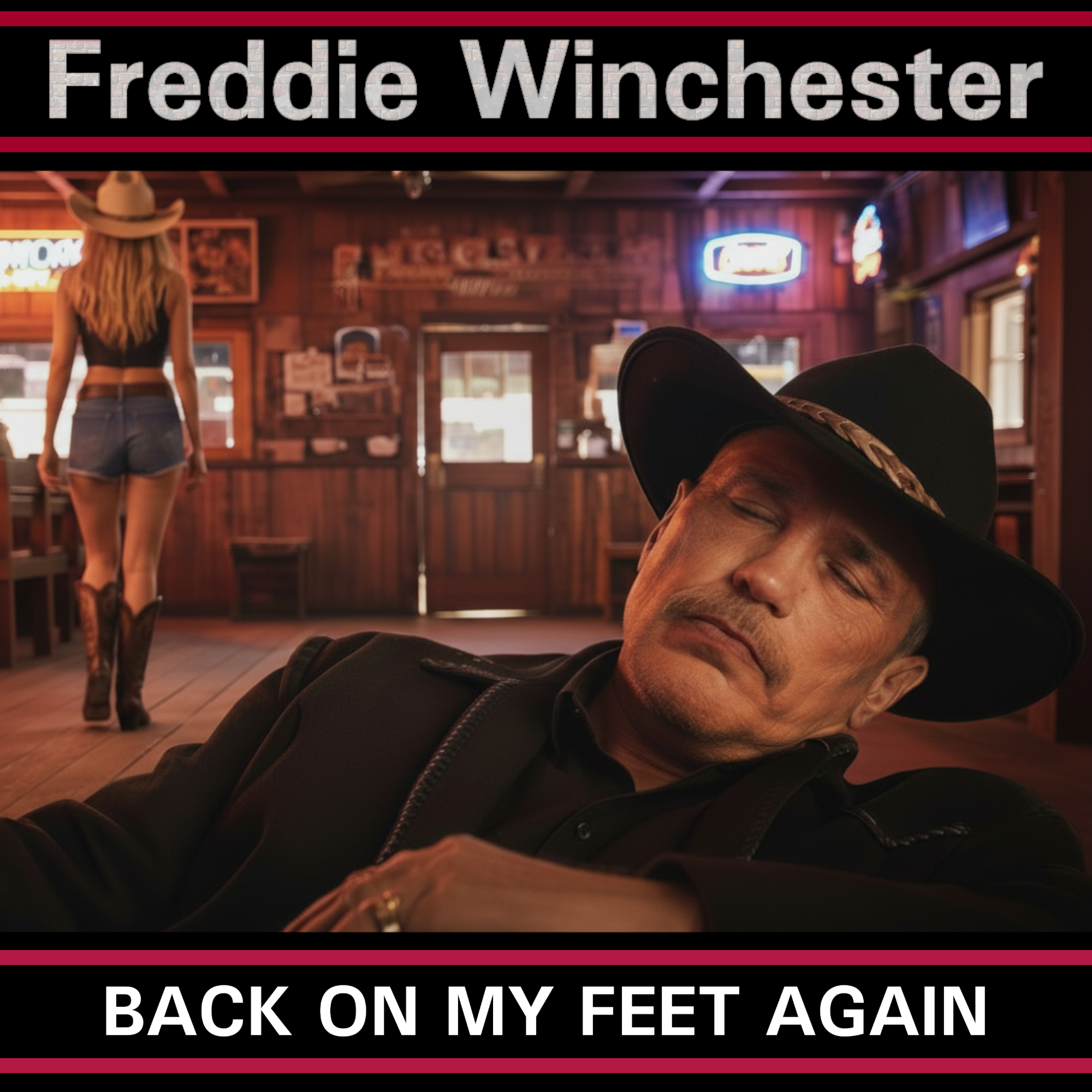
Winchester—the nom de plume of Francesco Frentrop—has crafted a track that refuses to take itself too seriously whilst simultaneously demonstrating considerable musical chops. The song's genesis during a Cyprus writing retreat under the tutelage of British artist Bex Marshall speaks to the international mongrel that country music has become, far removed from its Nashville-centric image. Indeed, the track's production credits read like a musical atlas: guitars from Tennessee, rhythm section from the Netherlands, backing vocals from Nigeria. This is country music as global citizen, and it wears its passport stamps proudly.
The collaboration with Dan Hochhalter, whose day job involves playing fiddle for John Fogerty, lends the track an undeniable authenticity. Hochhalter's fiddle and banjo work provides the mandatory genre signifiers without ever descending into pastiche. Similarly, Nashville-based JL Fulks delivers guitar parts that honour country traditions whilst maintaining enough grit to satisfy Winchester's blues instincts. The involvement of Bas Bach and Remco Engels—Winchester's former rock and metal bandmates from the 1990s—adds a rhythmic backbone that sits heavier than your typical country fare, giving the track a welcome muscularity.
Yet the most intriguing aspect of "Back On My Feet Again" lies not in its musical architecture but in its lyrical provocation. The line "I was down in the dumps, voted for Trump" has reportedly hit audiences with the impact of stand-up comedy, generating both sing-alongs and controversy in equal measure. Winchester's assertion that he struggled to find country singers willing to perform the track due to its political content reveals a troubling orthodoxy within a genre that once prided itself on outlaw status. That a throwaway lyric in a self-described "tongue-in-cheek ditty" could prove so inflammatory says more about the current state of popular music than any manifesto could.
The artist's stated intention to reference Randy Newman's "Rider in the Rain" as a conceptual touchstone proves instructive. Newman's ability to inhabit unreliable narrators and deploy irony as both shield and sword clearly resonates with Winchester's approach. Whilst the final product may have drifted from that initial vision, the DNA of Newman's satirical sensibility remains evident. Winchester's wife's immediate assumption that the song concerned her—a claim he firmly denies—suggests he's captured that peculiar quality of universal specificity that marks effective songwriting.
The choice to retain his own vocals, despite professing to lack a "country voice," ultimately serves the track well. Winchester's delivery carries enough rough edges to prevent the song from sliding into overly polished Nashville production values. The imperfection feels deliberate, even necessary, for a track that positions itself as commentary on genre conventions rather than slavish adherence to them.
The involvement of Winchester's fifteen-year-old metalhead son on guitar adds a generational dimension that reinforces the track's central thesis: musical boundaries exist primarily in the minds of gatekeepers. That rock, metal, blues, and country musicians could converge on a single track without apparent difficulty suggests these genres share more common ground than their respective tribes might care to admit.
"Back On My Feet Again" ultimately works because Winchester approaches country music as an outsider with insider access. He's assembled genuine Nashville talent whilst maintaining enough distance to observe and gently mock the genre's more precious conventions. The result feels neither entirely sincere nor wholly ironic—a productive ambiguity that keeps the listener engaged beyond the admittedly catchy chorus.
Whether Freddie Winchester develops into a full-fledged country act or remains a intriguing one-off remains to be seen. For now, "Back On My Feet Again" stands as evidence that great songs can emerge from the most unlikely circumstances, and that sometimes the best way to honour a tradition is to approach it from an unexpected angle. The track deserves its audience, controversy and all.