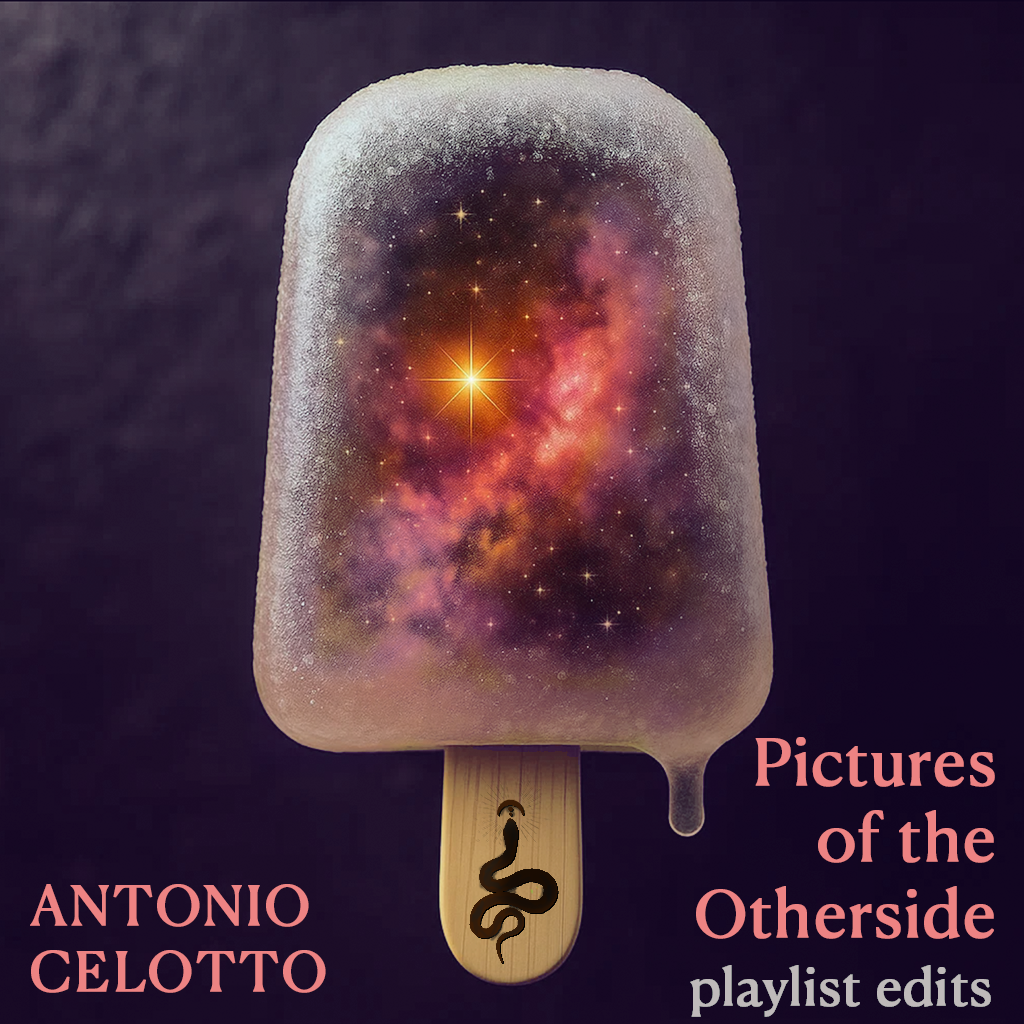
Celotto, an Oxford-based multi-instrumentalist with Italian roots and a filmmaking background, brings an unusual set of credentials to bear on this project. His years performing across London's jazz, rock, folk, and electronic scenes have clearly informed his sense of timing and dynamic progression, whilst his BFA in filmmaking lends him that essential sensitivity to narrative arc. The piece emerges from his pandemic-era meditation practice—a period of intensified inward focus that yielded what he describes as glimpses of "the other side," those fleeting moments of expanded awareness that elude verbal description yet demand musical expression.
The composition itself demonstrates meticulous psychoacoustic engineering. Celotto employs binaural waves created through interaural frequency difference, layering five to six harmonically related electronic elements tuned to successive overtones. The acoustic instrumentation—cello, guitar, crystal singing bowls—has been carefully tuned to 384 Hz, aligning with frequencies associated with the throat chakra. Environmental recordings of grasshoppers from Italian landscapes provide organic texture, grounding the ethereal in the terrestrial.
Yet technical sophistication alone does not guarantee artistic success. What elevates "Vishuddha" beyond mere sonic engineering is Celotto's insistence on treating the work as an "inner soundtrack" rather than ambient wallpaper. He identifies the emotional centre first—in this case, the throat chakra's association with expression, voice, and truth—then builds atmosphere, rhythm, and harmonic movement around that core. The result possesses genuine narrative drive, a quality conspicuously absent from much meditation music.
The Playlist Edit condenses a longer sound-bath into more accessible form without sacrificing atmospheric depth, and this economy proves wise. The piece opens gradually, establishing its sonic landscape with luminous, floreal textures that Celotto describes as glimpses of "the other side." The cello work carries particular lyrical weight, its timbral richness anchoring the more crystalline frequencies of the singing bowls. Throughout, the subtle binaural baseline encourages theta-wave states whilst maintaining enough rhythmic interest to prevent the listener's attention from wandering.
Celotto's film-scoring instincts manifest in his understanding of tension and release, of when to introduce new elements and when to allow space for contemplation. The harmonic progressions avoid the predictable pentatonic patterns that plague lesser ambient work, instead offering unexpected resolutions that keep the ear engaged. The low-frequency work deserves particular mention—sufficiently present to be felt physically without overwhelming the delicate upper register.
The listener response speaks volumes: nearly 15,000 plays on Insight Timer, a 4.89 rating, and hundreds of reviews. Many users report the music proves especially effective during expanded states of awareness, where its spatial depth and harmonic complexity fully reveal themselves. This dual functionality—as both meditative tool and structured listening experience—represents Celotto's signal achievement.
Living alongside his partner Julie Ela Grace, a meditation teacher, has clearly informed Celotto's approach, grounding his work in embodied practice rather than theoretical abstraction. The balance between narrative composition and deep stillness runs throughout "Vishuddha," creating music that functions simultaneously as contemplative aid and artistic statement.
The piece ultimately transcends its genre classifications, existing at the intersection of cinematic composition, meditation, and ritual. Celotto has crafted something that lingers—not merely in memory but in the body—long after the final harmonic resolves. This is meditation music for listeners who demand both depth and craft, stillness and movement, contemplation and rigour.