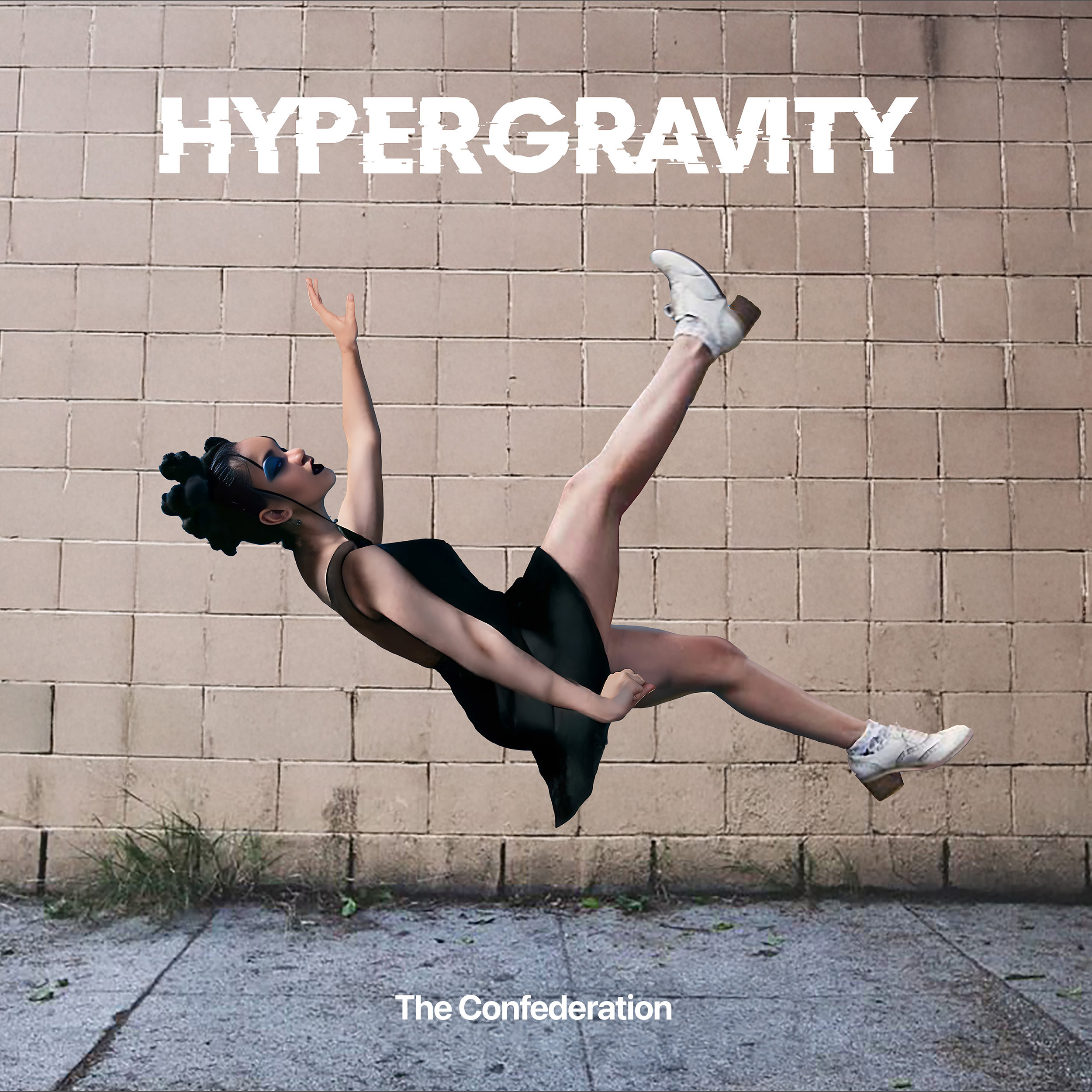
At its core, *Hypergravity* follows two outsiders, Lena and Norm, through a landscape where identity fractures like cheap porcelain. Lena, singer for a band called Devils, drags her troubled childhood behind her like chains, constructing elaborate delusions to avoid confronting the ruins of her past. She cycles through men with the desperate rhythm of addiction, convinced she's found salvation in the oddball Norm—a belief that sends her spiraling into fantasy rather than facing whatever uncomfortable truth he represents.
The sonic architecture supporting this narrative draws from the shadowy corners of electronic music, trip-hop, and indie's more introspective moments. Goldfrapp's sensual darkness, Massive Attack's urban paranoia, PJ Harvey's raw intensity, and Radiohead's alienated grandeur all cast their influence across these songs. Yet The Confederation also reaches back to the rock opera tradition—*Tommy*, *Quadrophenia*—reminding us that using albums to tell stories about fractured psyches has deep roots in British music.
The instrumentation deliberately stays minimal: guitar, bass, piano, keyboard, drums, vocals. This stripped-back approach serves the live performance intention, creating space for the narrative to breathe rather than drowning it in production excess. Yet the production itself proves anything but sparse. Digital enhancement courses through these tracks, particularly in the vocal treatments processed through AI modeling software like Kits AI. Human singers provided the raw material, then technology transformed their voices into distinct characters for Lena and Norm—a recording methodology that mirrors the album's thematic obsession with authentic versus artificial identity.
"Who Invented Mondays?" captures Lena's fragility after the first act's intensity, her yearning for something pure and innocent cutting through the strangeness of her world. "Half As Nice" momentarily lifts the spirits, suggesting possibility might exist beyond the emotional carnage. Then "Superpower" sends Lena catastrophically off the rails, her caged victims singing choruses back at her—a genuinely unsettling image. "Seeds In Winter" forces reality's bite, while "Wednesday" questions whether reality means anything at all anymore.
This last question resonates with uncomfortable urgency. The Confederation has crafted their Gothic Opera for young people navigating pressures their parents couldn't have imagined: identity as performance, stability as illusion, perception constantly at war with reality. What constitutes "real" when everything can be filtered, modified, AI-enhanced? What becomes of human connection when humans themselves feel increasingly artificial?
The decision to process human voices through AI to create characters adds layers of meaning beyond mere technical innovation. Lena and Norm exist as human-machine hybrids from the start, their very voices testifying to the blurred boundaries they struggle within. The technology doesn't just enhance the performance—it becomes part of the conceptual framework, raising questions about authenticity that the narrative then explores through Lena's fantasies and delusions.
The Confederation plans music videos mocking up the intended stage production, suggesting *Hypergravity* functions as blueprint for something larger. The album becomes artifact, documentation of a vision meant to unfold in three dimensions with performers embodying these damaged characters in real space.
Whether *Hypergravity* succeeds as pure listening experience separate from its theatrical ambitions remains to be heard. Gothic Opera demands patience, investment, willingness to follow narratives through darkness without guarantee of redemption. But The Confederation has clearly committed to their vision—a raw, digitally-enhanced meditation on modern emotional dilemmas that refuses easy answers or false comfort.
Christmas Day 2025 seems a perversely appropriate release date for this exploration of yearning, delusion, and the desperate human need for connection. While others unwrap presents and pretend at wholesome celebration, *Hypergravity* offers the gift of recognition: yes, the world feels this broken, identity really is this fluid, and perhaps fantasy sometimes provides the only bearable alternative to unbearable truth.