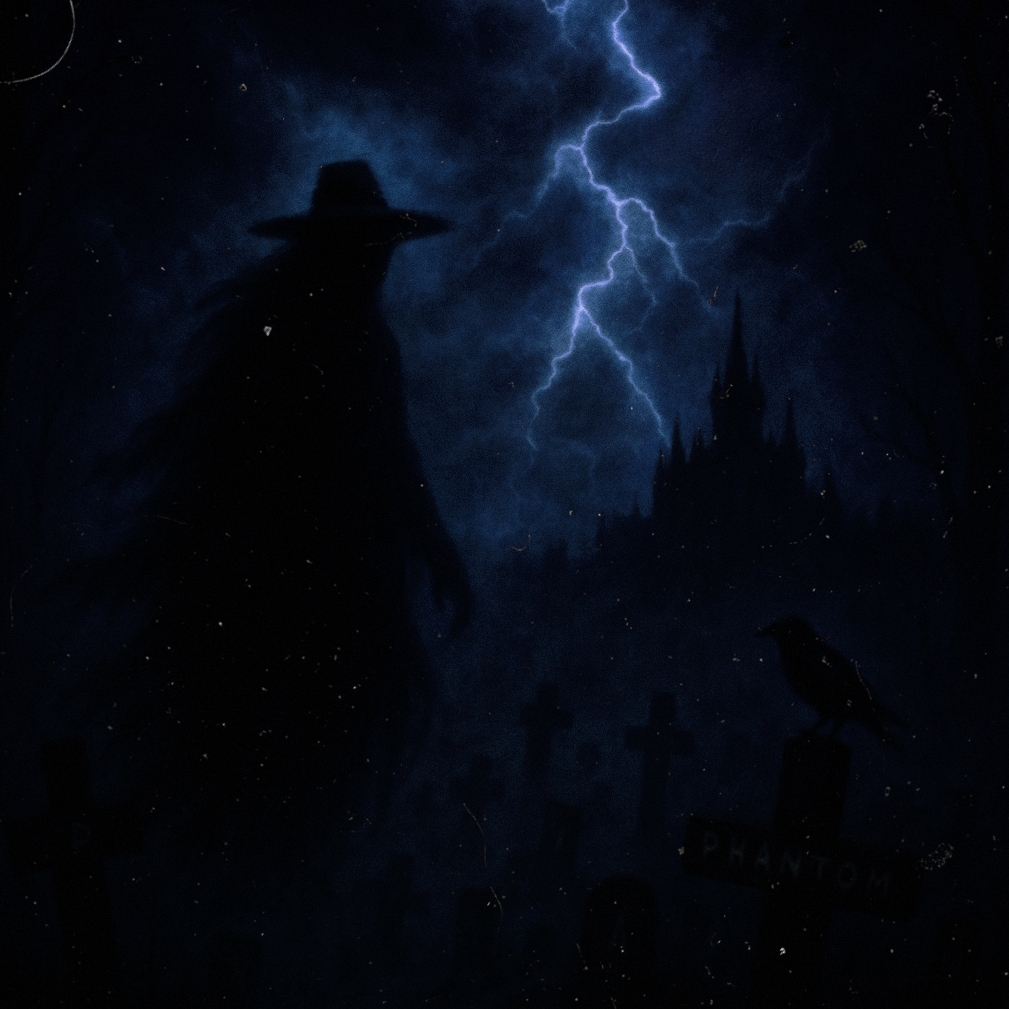
The opening bars establish immediate dominion. Pipe organs—those ancient instruments of both reverence and terror—swell with a weight that feels geological rather than merely musical. These aren't the sanitized church organs of Sunday service but something altogether more primordial, their tones suggesting forgotten crypts and ceremonies conducted beyond the reach of daylight. DUOMO understands implicitly that the organ's power lies not in melody but in its capacity to physically inhabit space, to make the air itself complicit in the composition's dark intent.
Choral voices emerge from this foundation like apparitions, their presence felt rather than clearly articulated. These aren't soaring gospel harmonies or angelic refrains; instead, DUOMO employs the choir as texture, as architectural element. The voices function much as they might in Ligeti's "Requiem" or Penderecki's sacred works—less as human expression and more as sonic architecture, building walls of sound that compress and expand with ritualistic precision.
The trap elements arrive with surgical minimalism. Where lesser producers might clutter the space with hi-hat rolls and 808 gymnastics, DUOMO exercises remarkable restraint. The percussion here is skeletal, each snare crack and bass thump landing with the deliberation of a funeral drum. This isn't trap music that wants to make you move; it's trap music that wants to make you reckon with stillness, with the spaces between sounds, with the terrible patience of things that wait in darkness.
The brilliance of "Phantom" lies in DUOMO's refusal to resolve tension. Traditional song structure depends on the promise and delivery of catharsis—the verse that builds to chorus, the bridge that releases accumulated pressure. DUOMO dispenses with such pleasantries entirely. This is music that understands tension itself as the destination, not a waypoint toward relief. The track maintains its oppressive atmosphere with the confidence of a composer who trusts that discomfort, properly sustained, becomes its own reward.
Comparisons feel almost inadequate, yet they provide necessary context. One might draw lines to Burial's fog-bound dubstep, to the liturgical doom of Sunn O))), or to the more adventurous moments of producers like Clams Casino when he collaborated with The Weeknd's earlier, darker material. Yet DUOMO carves out territory distinctly his own—what he terms "orchestral funeral trap" proves to be no mere genre exercise but a genuine sonic philosophy.
The production itself deserves particular commendation. In contemporary music, especially within electronic and hip-hop spheres, there exists a tyranny of the pristine, an obsession with crystalline separation where every element occupies its assigned frequency like soldiers at attention. DUOMO rejects this entirely. His mix is dense, claustrophobic even, with elements bleeding into one another like watercolors on wet paper. The organs bleed into the choir, the choir into the strings, the strings into the percussive void. This isn't sloppiness but intention—the sonic equivalent of a fog that makes discrete objects indistinguishable, that transforms the familiar into the uncanny.
"Phantom" makes no concessions to the algorithmic appetite for immediate gratification. There are no easily excerpted moments for social media, no convenient drops designed to trigger dopamine. This is music that demands—and rewards—complete attention, that functions as an immersive environment rather than a three-minute distraction. DUOMO has crafted not merely a track but an experience, a ritual space where gothic aesthetics, classical gravitas, and trap's modern menace merge into something genuinely unsettling and profoundly compelling.
For those with the patience and the appetite for music that privileges atmosphere over accessibility, mood over momentum, "Phantom" stands as a remarkable achievement. DUOMO has demonstrated that trap need not be confined to clubs or radio rotation, that its fundamental elements—the bass, the space, the rhythmic backbone—can support structures far stranger and more ambitious than the genre's mainstream practitioners might imagine. This is music for empty rooms and long nights, for those moments when beauty and dread become indistinguishable. It lingers long after its final notes fade, which is precisely the point.