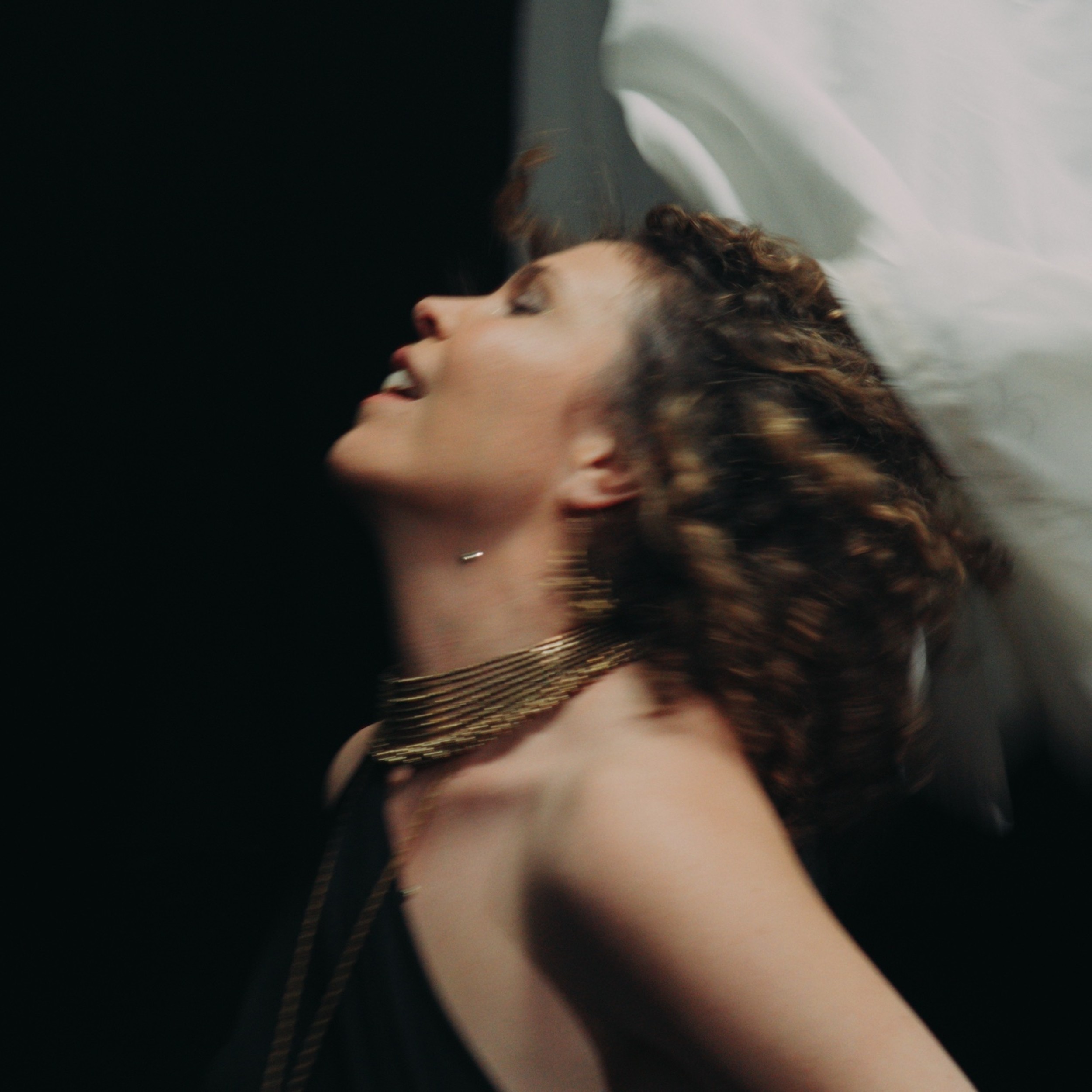
Drawing its title from Aldous Huxley's pleasure-numbing drug in *Brave New World*, "SOMA" examines emotional addiction through the lens of toxic romantic entanglement. Masadi positions her former lover as pharmaceutical—a substance she couldn't quit, a chemical dependency dressed in human skin. The metaphor works precisely because she refuses to overdetermine it; the song trusts its imagery to convey what heavy-handed lyrics might otherwise flatten into cliché.
Musically, "SOMA" occupies that fertile territory between restraint and release. The production bathes in atmospheric textures—synths that shimmer like heat haze, percussion that suggests rather than insists, all creating space for Masadi's voice to operate as the emotional centre of gravity. That voice carries a peculiar duality: sweet on the surface, yet capable of conveying considerable power when the song demands it. She sings with the controlled intensity of someone who knows exactly how much to reveal and when to hold back, creating a push-pull dynamic that mirrors the addictive relationship she's documenting.
The circular, repetitive elements in the arrangement prove essential rather than ornamental. Just as addiction involves returning compulsively to the same destructive behaviours, "SOMA" structures itself around loops and recurring motifs that draw the listener into its vortex. You find yourself caught in the undertow, which is precisely the point. This is music designed to enact its subject matter, not merely describe it.
The accompanying visual work extends the single's theatrical sensibility into symbolic territory. Masadi has cultivated an aesthetic that feels deliberately spare—sober, as the press materials describe it, though loaded with meaning. The circular imagery that permeates both video and artwork reinforces themes of cyclical behaviour, of being trapped in patterns you can see but cannot escape. The cinematography opts for intimacy over spectacle, pulling us into Masadi's interior world rather than keeping us at a comfortable observer's distance.
What impresses most about "SOMA" is its maturity of vision. As the first chapter of a three-act journey through death, transformation, and rebirth, it establishes a world with room to breathe and evolve. Masadi hasn't overplayed her hand; she's content to let this opening movement do its work without front-loading the entire conceptual architecture. The suggestion of what's to come proves more intriguing than exposition ever could be.
The single also benefits from refusing the current tendency toward either over-production or studied minimalism. Instead, "SOMA" finds its own middle path—sufficiently layered to create genuine atmosphere, yet never cluttered. Every element serves the emotional narrative Masadi is constructing. The result feels both contemporary and somehow outside immediate trends, which bodes well for a project conceived as a cohesive album-length statement rather than a collection of streaming-service gambles.
Masadi positions herself as an artist for whom personal pain must be alchemised into something purposeful. "SOMA" doesn't wallow; it transforms. The song acknowledges the reality of destructive relationships without romanticising them, and crucially, it locates agency in the act of artistic creation itself. By documenting her addiction, by giving it form and shape and sonic texture, Masadi begins the process of moving through it rather than remaining paralysed within it.
As an introduction to EL CICLO, "SOMA" succeeds in establishing both mood and ambition. Masadi has given us a first act that understands how to seduce without capitulating, how to be vulnerable without collapsing into sentimentality. If the subsequent chapters maintain this level of artistic coherence, we may be witnessing the emergence of an artist capable of sustaining vision across a full album cycle—increasingly rare in an industry that privileges the disposable over the deliberate.
The drug wears off eventually, but the song lingers.