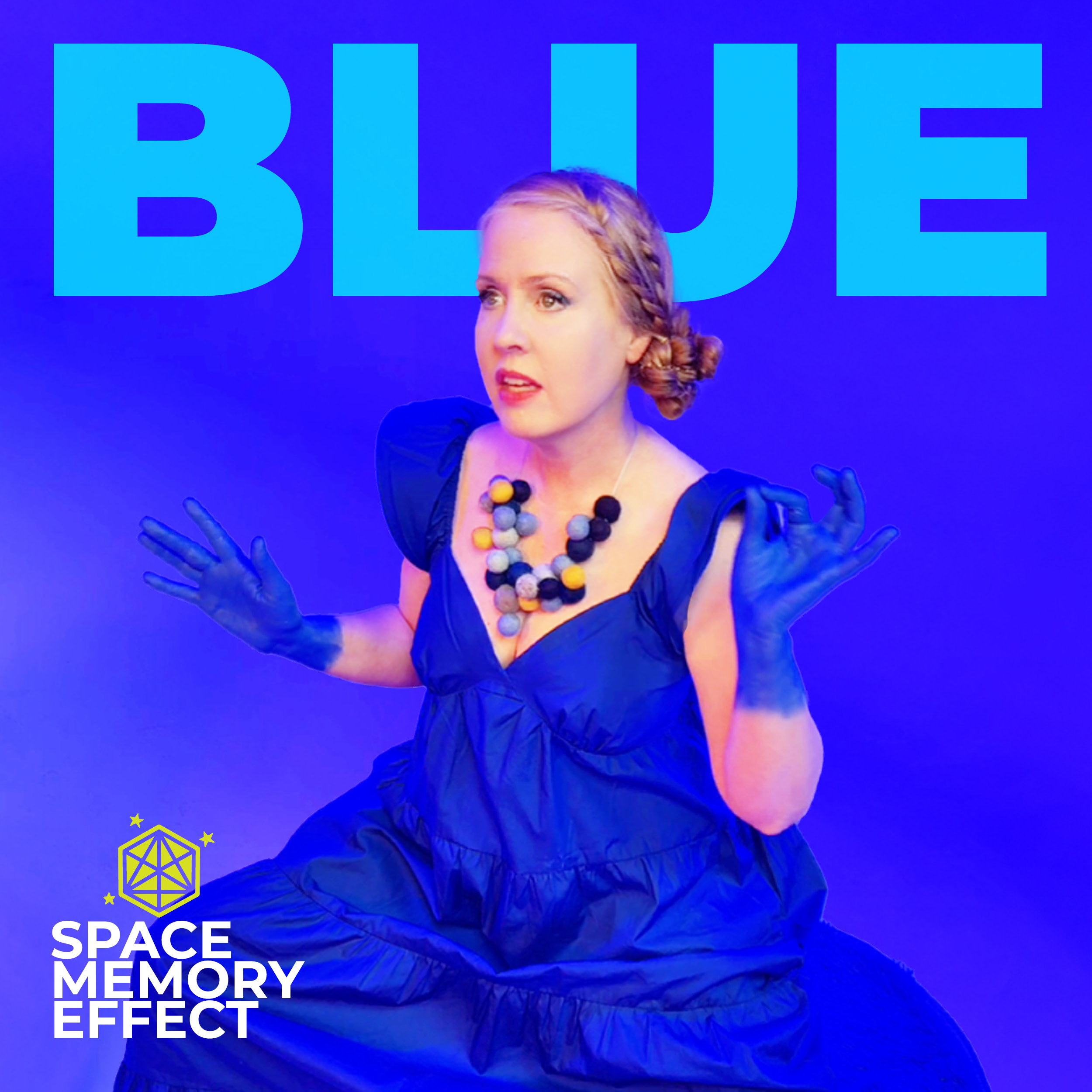
The track's origins tell their own story: born from workplace frustration in 2019, subsequently recorded in 2020, then shelved when Wallace felt unable to surpass Lewington's demo vocal. That she waited years, pursuing vocal coaching and what she terms "energy healing" before attempting the final version, speaks to an artistic integrity that borders on the obsessive. The result justifies that patience. Wallace's vocal performance, set against Lewington's arrangement of guitars, bass, and Tom Baracco's drums, possesses the hard-won confidence of someone who has genuinely earned their place at the microphone.
The cited influences—André Breton, Natalie Merchant, Tori Amos, Elvis Costello—form an intriguing constellation. Breton's surrealist techniques and stream-of-consciousness approach provide the conceptual framework, while the emotional directness of Merchant and Amos guides the execution. Costello's influence manifests in the balance between melodic accessibility and lyrical bite. These aren't superficial namechecks; one can trace their presence in the song's construction, in its willingness to juxtapose raw feeling with carefully wrought melody.
The recording process itself merits attention. Wallace in Snoqualmie, Washington; Lewington in London, Ontario; Baracco in Connecticut—three points on a map connected by Zoom and Cleanfeed, with Lewington remotely controlling Wallace's DAW while she performs. This isn't the typical file-swapping approach of pandemic-era collaboration. The real-time interaction, the live shaping of vocals and keys during sessions, creates a peculiar kind of presence-in-absence. The technology becomes transparent, leaving only the music and the connection between collaborators.
Lewington's production work deserves particular notice. His background with Enter the Haggis and various other projects brings a professional sheen to the proceedings, but never at the expense of the song's emotional core. The mix allows Wallace's voice to sit naturally within the arrangement rather than floating above it, creating a sense of integration that serves the material well.
Wallace's journey to this point—from catching a radio advertisement for Enter the Haggis while stuck in Seattle traffic, to attending that show, to subsequently signing up for Lewington's Patreon project, to finally requesting songwriting mentorship as a birthday gift—reads like a series of fortunate accidents. But "Blue" itself sounds anything but accidental. The chorus that emerged from that initial moment of workplace frustration has been refined, reconsidered, and ultimately vindicated by the years of development that followed.
For an independent artist working without label support, releasing this track now—as the opening salvo of a third album titled *From Here I Dream*—represents both vulnerability and strategic ambition. Wallace's previous output (two full albums, sixteen songs released last year before creative burnout set in) establishes her as a prolific creator. That she chose "Blue," this oldest and most foundational piece of her collaboration with Lewington, to launch this new chapter suggests a desire to establish continuity while moving forward.
The single stands as proof that the long road to completion can yield its own rewards. Not every song benefits from extended incubation, but "Blue" has clearly gained something from its years in development—a sense of perspective, perhaps, or simply the presence of a vocalist who has grown into full ownership of her material. Whether it marks a significant contribution to the wider musical conversation remains to be determined, but as a statement of artistic intent and a demonstration of hard-won craft, it succeeds admirably.