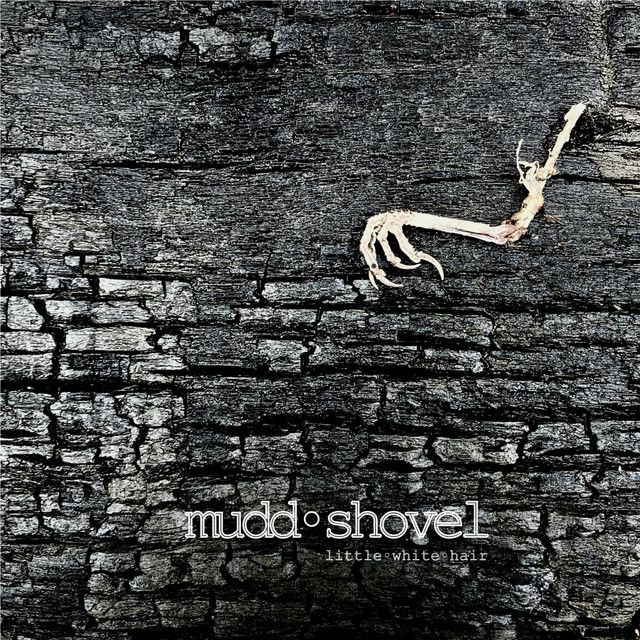
From the moment opener "Over the Line" detonates with its serrated guitar line, it becomes clear this trio have no interest in pleasantries. Shawn Hicks' vocals carry the weathered bark of someone who's lived every word, while Garreth Tackney's bass work rumbles beneath like tectonic plates preparing to shift. David Mulligan's drumming—informed by jazz sensibilities but deployed with rock brutality—provides the volatile foundation upon which the band's controlled chaos is built. The track celebrates triumph, yes, but the kind earned through attrition rather than awarded by committee.
The album's thematic heart beats darkest on "Deep Fried Soul," a harrowing examination of addiction that refuses to glamorise or simplify its subject. The song crawls through its runtime with a deliberate, uncomfortable heaviness, the arrangement mirroring the slow suffocation of dependency. It's the record's most visceral moment, raw without resorting to exploitation—a difficult balance that mudd•shovel manage with surprising maturity for a debut.
Elsewhere, "Third Time Today" weaves Irish folklore into its DNA, conjuring images of fairy warnings and superstitious dread. The whispered delivery and creeping melodic progression create genuine unease, proving the band capable of dynamics beyond sheer volume. "Don't Drink the Water" extends this exploration of the forbidden, its lyrics dancing around temptation while the music ebbs and flows like the tide it references.
The title track stands as the album's emotional centrepiece. "Little White Hair" strips away the aggression to expose isolation's quiet devastation. Hicks' guitar work here shows remarkable restraint, each note carefully placed rather than hurled, while his vocals convey the numb horror of self-recognition. When he sings of mirrors staring back, you believe he's been trapped in that gaze.
"Heading Home" captures the bittersweet pull of origins with genuine poignancy, while "No Further" closes proceedings with a meditation on inevitable distance—both geographical and emotional—that growth demands. The production varies across tracks, with some handled by Martin Quinn at Jam Studios and others by Devilla Sounds, but this inconsistency never undermines the album's cohesion. If anything, it adds to the record's rough-hewn aesthetic.
What mudd•shovel have achieved here is a proper album in an age of playlist fodder—nine tracks that function as chapters in a larger narrative about survival, failure, and the grim determination required to keep moving forward. The influences are worn openly: grunge's emotional directness, post-punk's angular tension, the melodic sensibility of modern alt-rock. But the synthesis feels organic rather than derivative.
*Little White Hair* won't trouble the charts, nor does it aspire to. This is music for dimly lit venues with sticky floors, for people who still believe rock music should occasionally draw blood. Ireland's underground scene has produced another worthy contender, and if mudd•shovel can harness this intensity across future releases while sharpening their focus, they may well prove essential rather than merely promising.
For now, this debut marks its territory convincingly—scarred, uncompromising, and alive with the kind of hunger that can't be manufactured. The mirror stares back indeed.