From its opening bars, "Shooting Star" establishes an atmosphere of wistful contemplation. The production, which Bartolo describes as cinematic, unfolds with the kind of gradual expansiveness that recalls the work of producers who understand that space and silence can be as powerful as sound. There's a gentle insistence to the arrangement—warm guitar lines interweaving with understated percussion, building towards moments of orchestral swell that never quite tip into melodrama. It's tasteful in the best sense of the word, which is to say it knows when to pull back just as much as when to push forward.
The vocal performance here is the song's anchor. Bartolo possesses a voice that wears its vulnerability on its sleeve—not in the overwrought manner of lesser talents who mistake volume for emotion, but with a quiet intensity that draws the listener in. There's a lineage here: echoes of Lewis Capaldi's raw-throated honesty, Ed Sheeran's conversational intimacy, James Arthur's bruised romanticism. Yet Bartolo manages to synthesize these influences without merely replicating them, finding his own register somewhere between confession and universal statement.
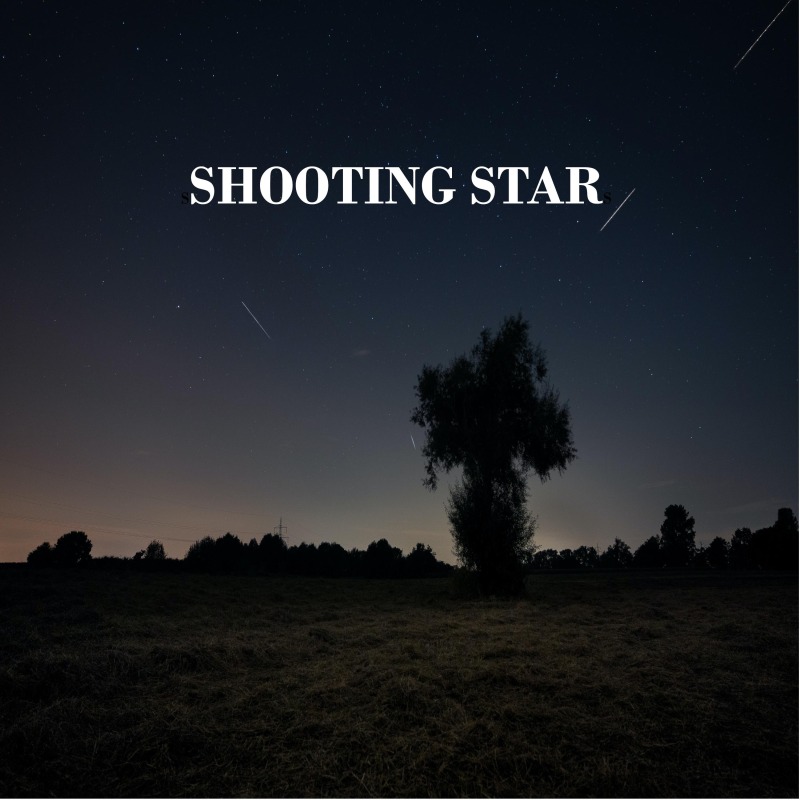
The lyrical conceit—comparing fleeting human connections to shooting stars—could have stumbled into greeting card territory in less capable hands. Yet Bartolo navigates this metaphor with admirable restraint. The song recognizes something profound about the ephemeral nature of meaningful relationships: that some people blaze through our lives with extraordinary brightness before vanishing, and that our task is to appreciate them in the moment rather than mourning their inevitable departure. It's a mature perspective, one that speaks to loss without wallowing in it, to gratitude without sentimentality.
What distinguishes "Shooting Star" from much of contemporary pop balladry is its refusal to resolve its emotional complexity into easy answers. The production never quite explodes into the cathartic key change that radio programmers love, the lyrics never reduce their subject to simple platitudes. Instead, the song maintains its contemplative mood throughout, trusting the listener to sit with ambiguity and reflection. In an era when pop music often feels engineered for maximum algorithmic impact—complete with strategic hooks placed at 30-second intervals—this commitment to sustained mood feels almost radical.
There's also something to be said for Bartolo's position within the European pop ecosystem. As a Maltese artist competing in Eurovision preliminaries and building an independent career, he operates outside the machinery of major label pop while still maintaining professional polish. "Shooting Star" bears the hallmarks of careful studio craft—the mix is pristine, the performances assured—yet it retains an authenticity that often gets sanded away in more commercial contexts. The track has been described as one of his most personal releases, and that emotional investment is palpable.
The song's greatest strength may be its universality. While rooted in personal experience, "Shooting Star" speaks to anyone who has watched someone important drift out of their orbit, whether through circumstance, choice, or the simple passage of time. It's the sound of looking up at the night sky and being reminded simultaneously of our smallness and our capacity for connection—a duality that the best pop music has always understood intuitively.
In the grand tradition of British music criticism's tendency to locate the universal in the particular, "Shooting Star" succeeds precisely because it doesn't overreach. It's a modest song with modest aims: to capture a specific emotional state and render it beautifully. That it achieves this with such consistency of vision and execution suggests that Mark Anthony Bartolo is an artist worth watching closely. In a crowded field of would-be torch singers and pop balladeer, he's found his own celestial coordinates.