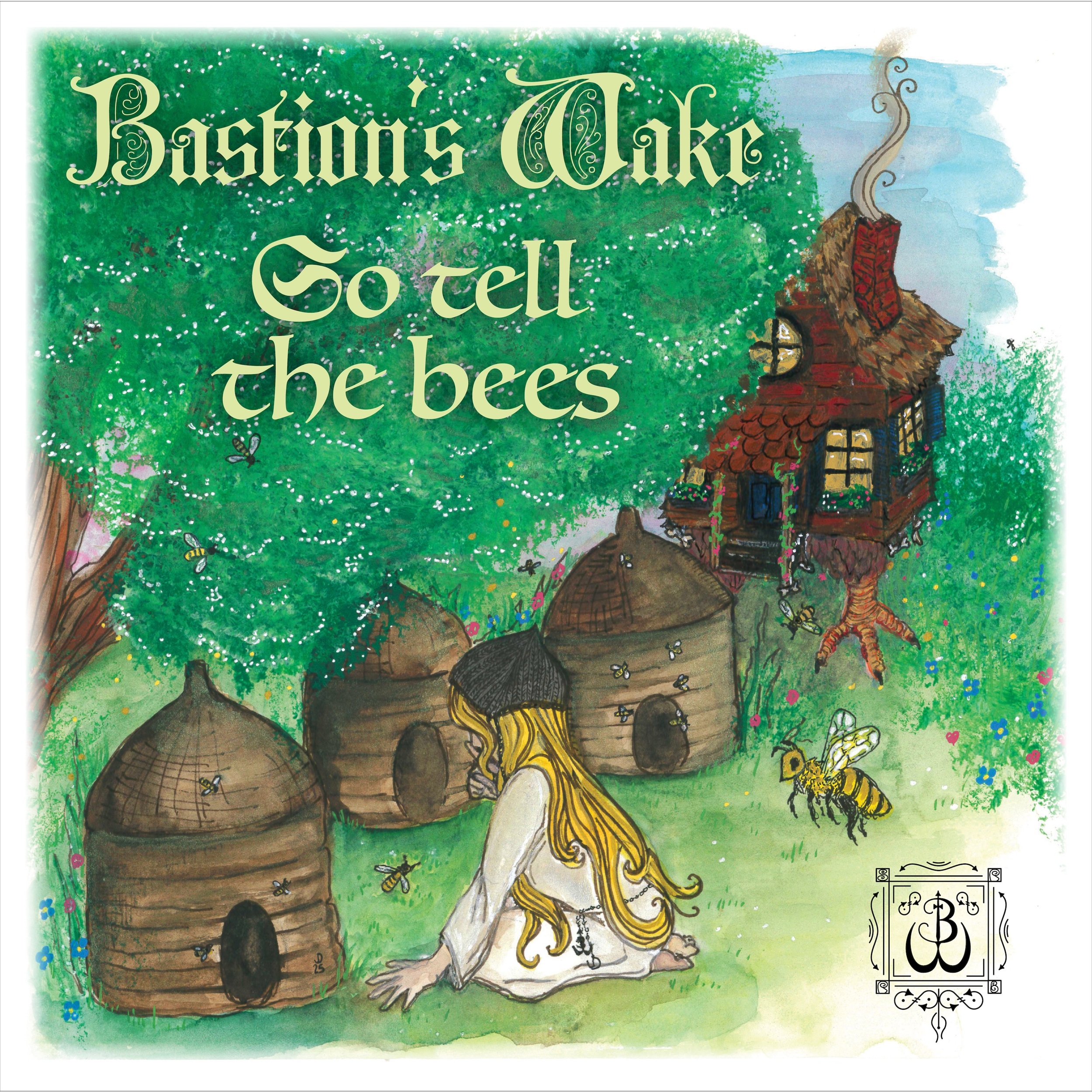
The album's title draws from folklore—the ancient practice of keeping one's bees informed of household events, births and deaths alike, lest they abandon the hive. This metaphor of communication and connection permeates the record's thematic DNA. Across its runtime, Bastion's Wake explore grief, loss, and tentative hope with the kind of emotional heft that separates genuine artistic expression from mere genre exercise.
"Willow's Ruse," the album's calling card, establishes the band's sonic template immediately. Sami's vocals possess a haunting, ethereal quality that floats above Ray's down-tuned guitar work—technical without sacrificing atmosphere, heavy without descending into brutality for its own sake. The rhythm section, completed in 2019 by drummer Rob Westbrook and bassist Ben, provides the foundation that earlier iterations of the band could only approximate through programming. The presence of actual human percussion and bass transforms what might have been merely atmospheric into genuinely propulsive.
The conceptual nature of "Go Tell the Bees" reveals itself gradually. Unlike many albums that trumpet their narrative ambitions only to deliver disconnected songs, this collection maintains coherence while allowing individual tracks their autonomy. "Runway" demonstrates the band's ability to construct hard-hitting epics, while "Pathos" and "Tiny Box" strip away the bombast for moments of genuine intimacy. The latter tracks prove particularly effective, suggesting that Bastion's Wake understand dynamics not as mere volume shifts but as emotional architecture.
Brun's production deserves particular mention. The Norwegian producer, whose work with Borknagar established him as a master of cinematic metal soundscapes, has captured Bastion's Wake at their most potent. The mix preserves clarity without sacrificing power—no small feat when dealing with dense arrangements that incorporate symphonic elements alongside death and doom metal textures. His addition of samples and production flourishes enhances rather than overwhelms, suggesting an intuitive grasp of the band's aesthetic aims.
The recording itself, tracked at Electric Fossil Studios in Milford, Delaware, benefits from engineer Kirby Fitzgerald's involvement. His contributions during the writing process apparently rescued songs that nearly didn't survive to tape, and the legendary API console (reputedly used for U2's controversial iPhone-delivered album) lends warmth to the proceedings. The combination of state-of-the-art analog gear for guitars and vocals with Brun's digital wizardry creates a sonic space that feels simultaneously vintage and contemporary.
Bastion's Wake emerged from necessity as much as vision. Sami and Ray's early years, performing as a duo with programmed backing tracks in rural Delaware, could have been a limitation. Instead, they transformed constraint into distinctive identity—the "lush cinematic sound" they cultivated through programming became foundational to their aesthetic even after expanding to a quartet. This history of innovation through adversity infuses "Go Tell the Bees" with particular urgency.
The album stands as evidence that regional isolation needn't mean artistic provincialism. By drawing from melodic death metal, doom, and symphonic power metal influences while maintaining their own voice, Bastion's Wake have created a record that deserves attention beyond the local Delaware scene that nurtured them. "Go Tell the Bees" succeeds because it trusts its emotional content, never mistaking complexity for depth or bombast for genuine power. The bees have been told, and they're thriving.