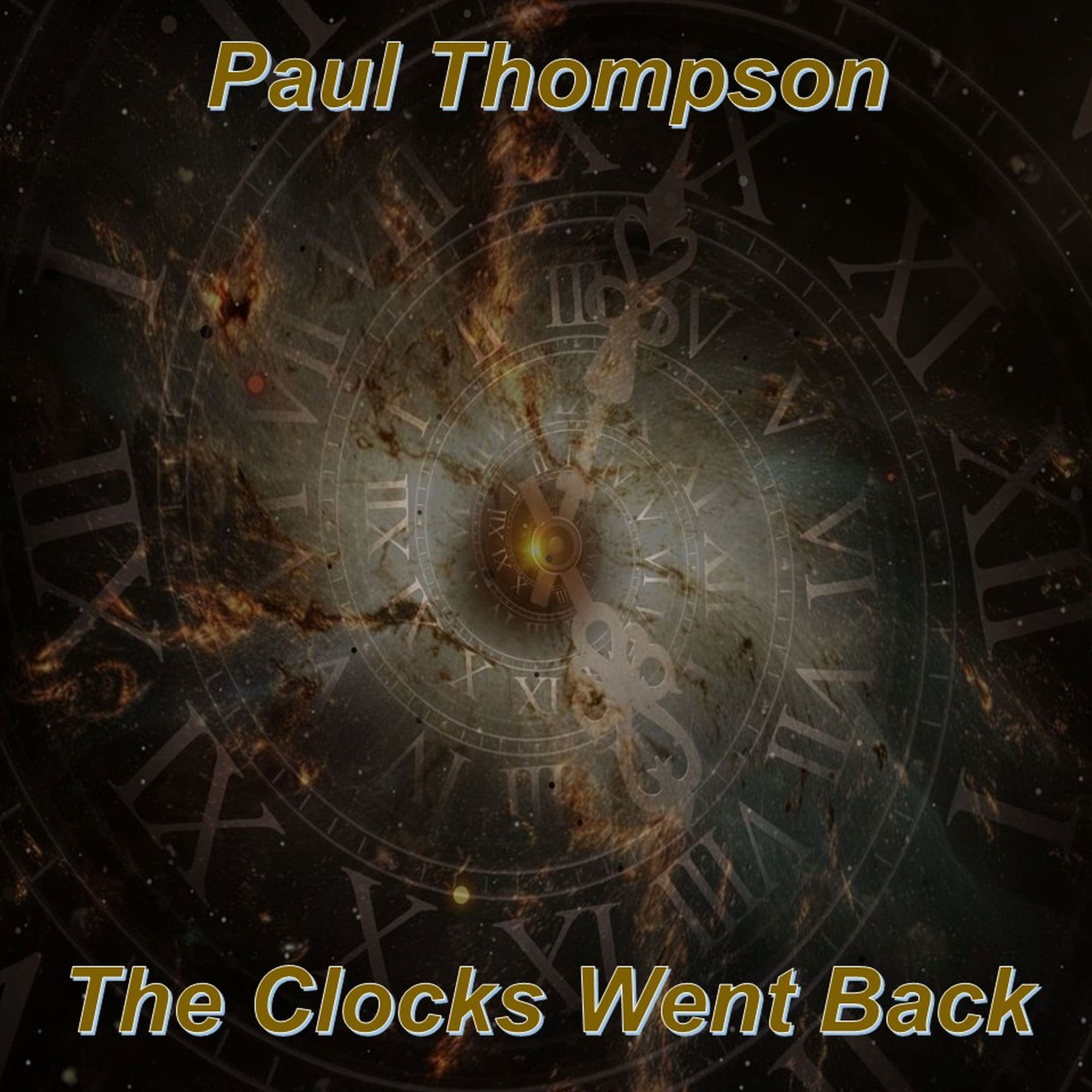
The premise alone deserves applause for its sheer bloody-mindedness. Thompson claims to have created "the first single in the history of humankind to time-travel its release date," which is either brilliant marketing or the kind of revelation that sounds profound at three in the morning but holds genuine artistic merit upon closer inspection. Yet here's the thing: it works. Not because the science holds up—it patently doesn't—but because the artistic gesture captures something genuine about our fraught relationship with time's arbitrary markers and our need to occasionally step outside society's relentless scheduling.
What emerges from Thompson's Norfolk studio carries all the hallmarks of British singer-songwriter tradition at its most introspective. His voice possesses that particular quality of weathered wisdom, neither trying to impress with acrobatics nor hide behind production trickery. Fatea Magazine's comparison to Neil Young feels apt—there's that same unhurried confidence, that willingness to let space and silence do their work. The arrangement feels deliberately measured, as though the song itself refuses to be rushed by the very temporal constructs it questions.
The lyrics deserve particular attention. While the promotional materials wax lyrical about expanding universes and cosmic homes growing by 264,600 kilometres per second, the song itself appears more concerned with the intimate, human scale of temporal experience. Thompson isn't really asking us to contemplate the Universe's expansion—he's asking us to notice that peculiar Sunday morning when we collectively agree to pretend an hour never happened, and to find wonder rather than inconvenience in that moment. The cosmic rhetoric serves as scaffolding for something far more personal: liberation from schedules, from deadlines, from the relentless forward march we've all agreed to participate in.
Production-wise, the track demonstrates the admirable restraint of someone who has studied his craft at postgraduate level—Thompson holds a Master's Degree in Songwriting from Bath Spa University—and knows exactly when less delivers more. Recording the majority of the parts himself at his Norfolk studio, he's created something that breathes naturally, with organic instrumentation that allows silence its proper weight. This is multi-instrumentalism in service of the song rather than showing off, the confidence of someone seven albums deep into a career who no longer needs to prove anything.
The accompanying video—premiered on YouTube with all the ceremony of a minor scientific breakthrough—extends the conceptual framework without becoming tedious. Thompson understands that cosmic pretension only works when leavened with self-awareness and genuine passion for the subject matter. His environmental concerns and love of the natural world, which have long animated his songwriting, find perfect expression here: contemplating the vastness of space naturally leads us back to appreciating the precious rarity of our own planet.
There's something particularly fitting about Thompson releasing this meditation on time and place just as he prepares to relocate to the Isle of Mull, where he'll spend the next year working with Mull Theatre and drawing inspiration from the remote Scottish landscapes that inform *Passing Places*. The album's title references those single-track road passing places—moments of pause, of yielding, of acknowledging another traveller—and "The Clocks Went Back" extends that metaphor into temporal rather than geographical space.
Does the track reinvent the wheel? Absolutely not. Thompson isn't trying to revolutionize pop music or challenge our fundamental understanding of songcraft. What he has managed, however, is to take that most mundane of British rituals—the biannual clock adjustment—and transform it into a meditation on freedom, presence, and the peculiar comfort of acknowledging time's essential absurdity. For someone who once held a Guinness World Record for travelling 1,000 miles on an electric milk float called Bluebell—documenting the journey in a published book—this kind of playful yet profound gesture feels entirely characteristic.
Whether "The Clocks Went Back" becomes stuck in its promised time-loop or simply takes its place among the autumn's releases hardly matters. What matters is that Paul Thompson has reminded us that pop music can still play with ideas, that singer-songwriters needn't choose between cleverness and sincerity, and that sometimes the best response to time's tyranny is neither rebellion nor submission, but a well-crafted song released at precisely the right absurd moment. If this is what Thompson brings to Passing Places, we should all be grateful for whatever inspiration those Mull landscapes provide.