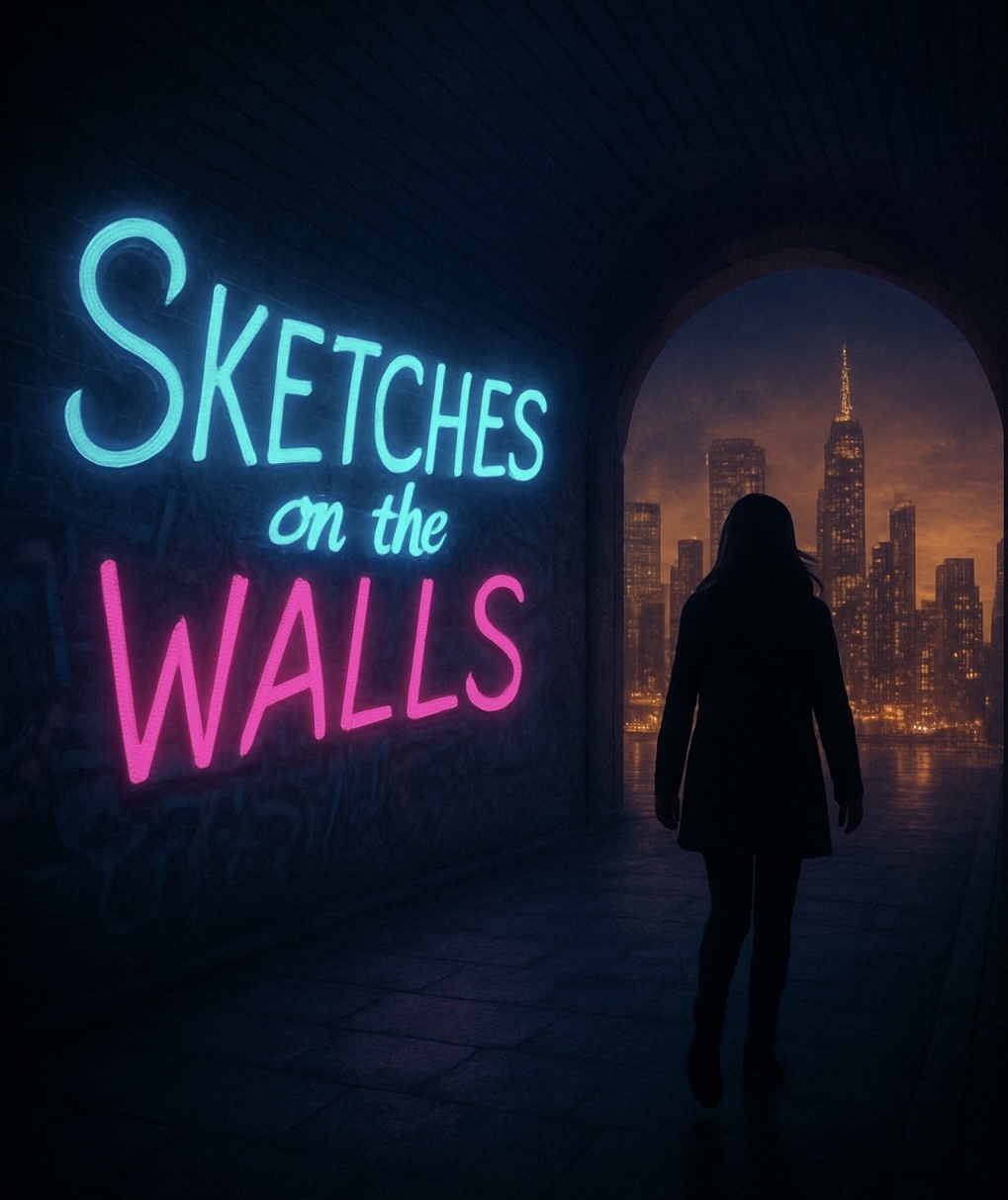
The Singapore-based artist — herself a product of Dubai, Chicago, Boston's Berklee College, and points between — has fashioned a track that refuses easy categorization, much like the woman behind it. Interior designer turned ICMA Finalist, multilingual vocalist turned collaborator with Mumbai's Rish and a production team who clearly understand the assignment: this is not merely a song but a statement of artistic philosophy rendered in verse and hook.
The central conceit proves remarkably sturdy. Those titular sketches, initially monochrome aspirations adorning student walls, become the governing metaphor for transformation itself. Farswani articulates the journey from grayscale memory to technicolor present with a songwriter's precision and a designer's eye for composition. The shadows we inherit — criticism absorbed, judgments internalized, memories that haunt rather than illuminate — become raw material for something richer. The track champions the arduous work of self-perception, that gradual learning to see oneself not in the muted tones others project but in full chromatic range.
The biographical substrate runs deep. Dubai to Chicago to Boston traces not merely physical relocation but psychic reformation, each city leaving its residue, each stranger encountered along the way unknowingly contributing sparks to the creative conflagration. Yet Farswani resists simple nostalgia, instead interrogating how society's obsession with categorical labels — nationality, profession, genre — obscures the messy, transcendent reality of artistic practice. Her implicit argument: true creativity exists beyond taxonomy, in the spaces where definitions blur and merge.
It is the Hindi bridge where this philosophy crystallizes most powerfully. The shift from English to Hindi isn't decorative multiculturalism but structural necessity. The lines convey fracture and displacement — shattered dreams, scattered desires, the disorienting question of arrival that haunts diaspora consciousness. Farswani's multilingual facility allows her to access emotional registers unavailable in monolingual expression, acknowledging that some experiences exist most authentically in their original linguistic vessel. The bridge doesn't translate so much as transform, offering resilience and rediscovery as counterweights to loss.
Rish's contribution to the musical architecture deserves particular recognition. The chords and harmonies don't simply accompany; they argue and converse, creating sonic scaffolding that mirrors the song's preoccupation with structure and space. The backing vocals layer present voice with ghosted past selves, suggesting the polyphonic nature of identity itself. The English-Hindi fusion achieves seamless integration not through compromise but through confident hybridity, each language retaining its distinct character while serving a unified vision.
The production choices reflect admirable restraint. Rather than drowning nuance in gloss, the team has preserved texture and grain, allowing the recording to breathe. This suits a song fundamentally concerned with process over product, with becoming rather than arrival. The sonic space accommodates doubt and determination in equal measure, mirroring the psychological complexity Farswani documents.
Following her debut EP "Got My Mojo" and subsequent releases including the Dem-C collaboration and "Under a Blazing Sun" with its Arabian influences, Farswani has consistently demonstrated synthetic genius — the ability to fuse disparate elements into coherent artistic statements. Yet "Sketches On The Walls" represents maturation, a willingness to make the personal profoundly political. The song interrogates valuation systems that prize labels over substance, that allow external judgment to calcify into identity, that forget the artist's fundamental task: continual self-authorship against relentless external definition.
The "Be You!" message animating the track could easily collapse into greeting card sentiment. Farswani avoids this trap through hard-earned specificity. This is not generic empowerment but testimony from someone who has done the actual work of becoming, who understands that authenticity isn't discovered like buried treasure but constructed deliberately, sketch by careful sketch, until the wall becomes gallery and the gallery becomes life lived boldly.
The blues-rock foundation characterizing much of her earlier work remains present but integrated into a broader palette. Pop-rock structures provide framework, world music influences supply color, and Farswani's design sensibility ensures every element serves the larger vision. The result operates simultaneously as confession, manifesto, and invitation — a rare achievement in contemporary pop.
"Sketches On The Walls" succeeds because Farswani understands that universal art often emerges from particular experience. Her journey across continents becomes our journey across the terrain of self. Her multilingual facility becomes metaphor for the various languages — visual, sonic, emotional — through which we learn to articulate who we are. Her insistence on coloring her own life boldly becomes implicit challenge to everyone encountering the work.
This is sophisticated, grown-up pop music that trusts its audience to follow complex emotional geography. Seema Farswani has announced herself not merely as promising talent but as necessary voice — one fluent in the lingua franca of the permanently in-between, the perpetually evolving, the determinedly authentic. The sketches are becoming masterworks, and we're fortunate to witness the transformation.