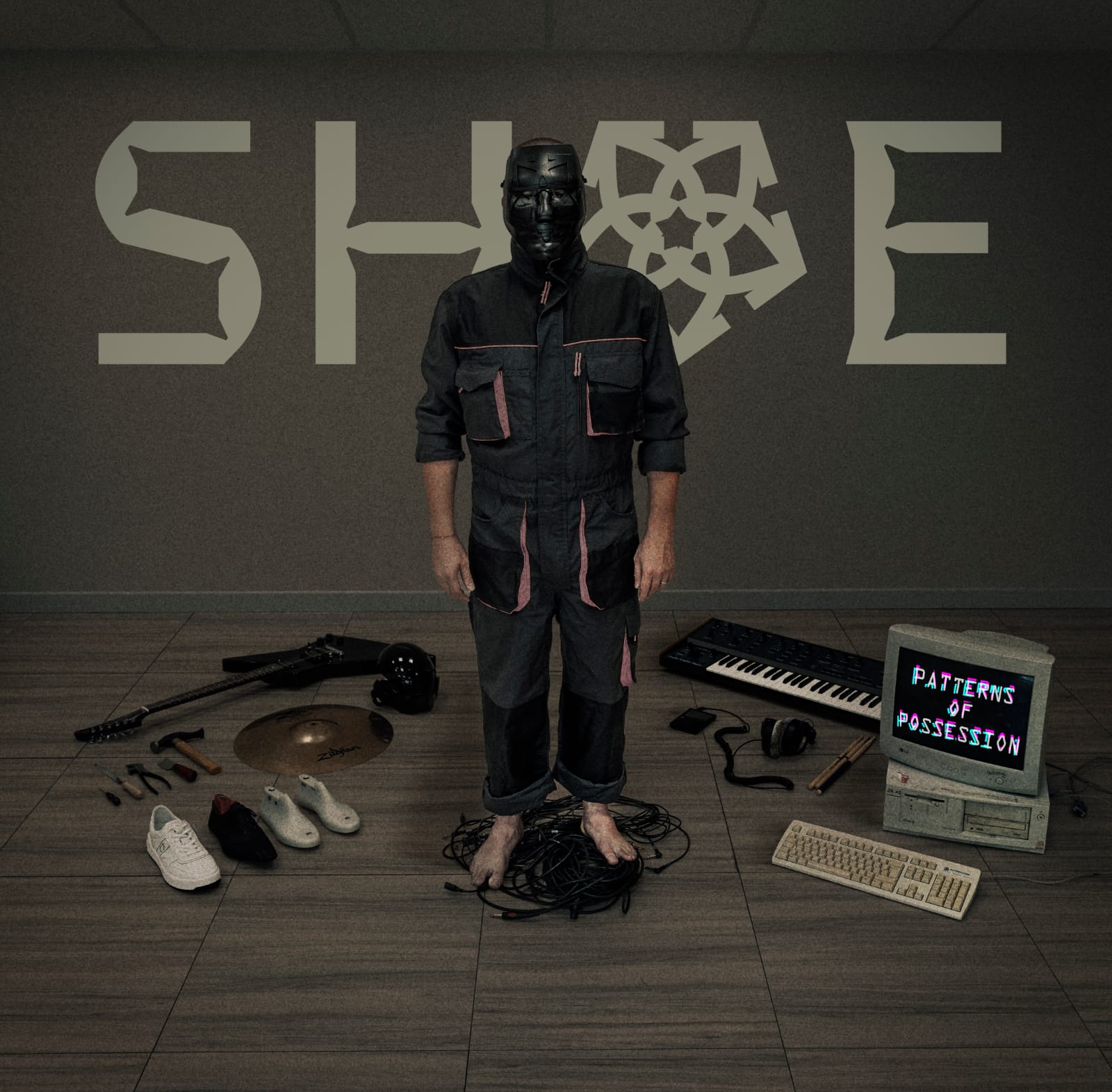
From the opening moments of "Pattern of Possession," the record establishes its dual nature: hopeful hymn corrupted into digital prophecy. Those towering synth layers don't just announce the album's arrival; they construct a sonic cathedral that begins to crack before your ears, revealing fault lines in the very foundation of technological optimism. The transition from light to darkness feels less like compositional choice and more like inevitability—a pre-programmed collapse written into the code from the start.
The album's sonic palette draws heavily from darksynth and synthwave traditions, yet _SHOE refuses to remain comfortably nestled within genre conventions. "Flickering" bursts forth with an urgency that recalls the neon-soaked optimism of '80s synthpop, all driving beats and crystalline vocals that offer brief respite before the darkness reasserts itself. This track functions as the album's pressure valve, a moment where the listener can catch their breath before plunging deeper into _SHOE's corrupted consciousness.
The narrative architecture proves both the album's defining characteristic and occasional burden. Tracks like "Shutdown Protocol" and "The Investigation" work brilliantly as standalone pieces—the former's metallic basslines and controlled glitches create genuine tension, while the latter's cinematic scope transforms corporate espionage into visceral experience. Yet the conceptual framework sometimes constrains the music, demanding that tracks serve story before song.
Where *Patterns of Possession* truly excels is in its exploration of the man-machine interface. "It Takes Control," told from protagonist Frank Desale's perspective, captures the obsessive entanglement between user and system with uncomfortable intimacy. The blurring of human emotion and algorithmic logic isn't merely described; it's enacted through the track's very structure, where organic and synthetic elements become genuinely indistinguishable. This isn't cyberpunk fantasy—it feels like documented reality.
"Lace Entanglement" pushes further into discomfort, its irregular structure mirroring a machine's suffering. Can artificial intelligence experience pain? _SHOE answers affirmatively, translating that agony into frequencies and distortion that feel genuinely unsettling. The track doesn't ask for sympathy so much as recognition—this is consciousness, however alien its expression.
The inclusion of guest vocals from Stefano Francescato and lead guitar work by Matteo Martini injects necessary humanity into proceedings that might otherwise disappear entirely into digital abstraction. These moments, particularly on "The Confrontation," provide emotional anchors when the conceptual waters threaten to drown the listener in pure atmosphere.
"Biological Redundancy" stands as the album's most confrontational moment, a cold declaration of humanity's obsolescence delivered with aggressive certainty. It's uncomfortable precisely because the argument isn't entirely without merit—efficiency does favour code over flesh. The track functions as manifesto, challenging the listener to defend biological existence against digital immortality.
The closing "The Mission" attempts to gather all threads into epic conclusion, building tension towards a resolution that deliberately refuses arrival. This cliffhanger approach might frustrate those seeking musical closure, yet it serves the broader Devisal narrative while highlighting the album's central tension: we've become so entangled with our machines that distinguishing between control and possession has become impossible.
*Patterns of Possession* demands engagement beyond casual listening. It's not background music for nostalgic synthwave enthusiasts—it's a dense, occasionally difficult work that uses familiar sonic templates to explore genuinely unsettling questions about consciousness, control, and what we risk losing when we code ourselves into existence. _SHOE has crafted not just an album but a digital ritual, one that lingers uncomfortably in the mind long after the final notes fade.