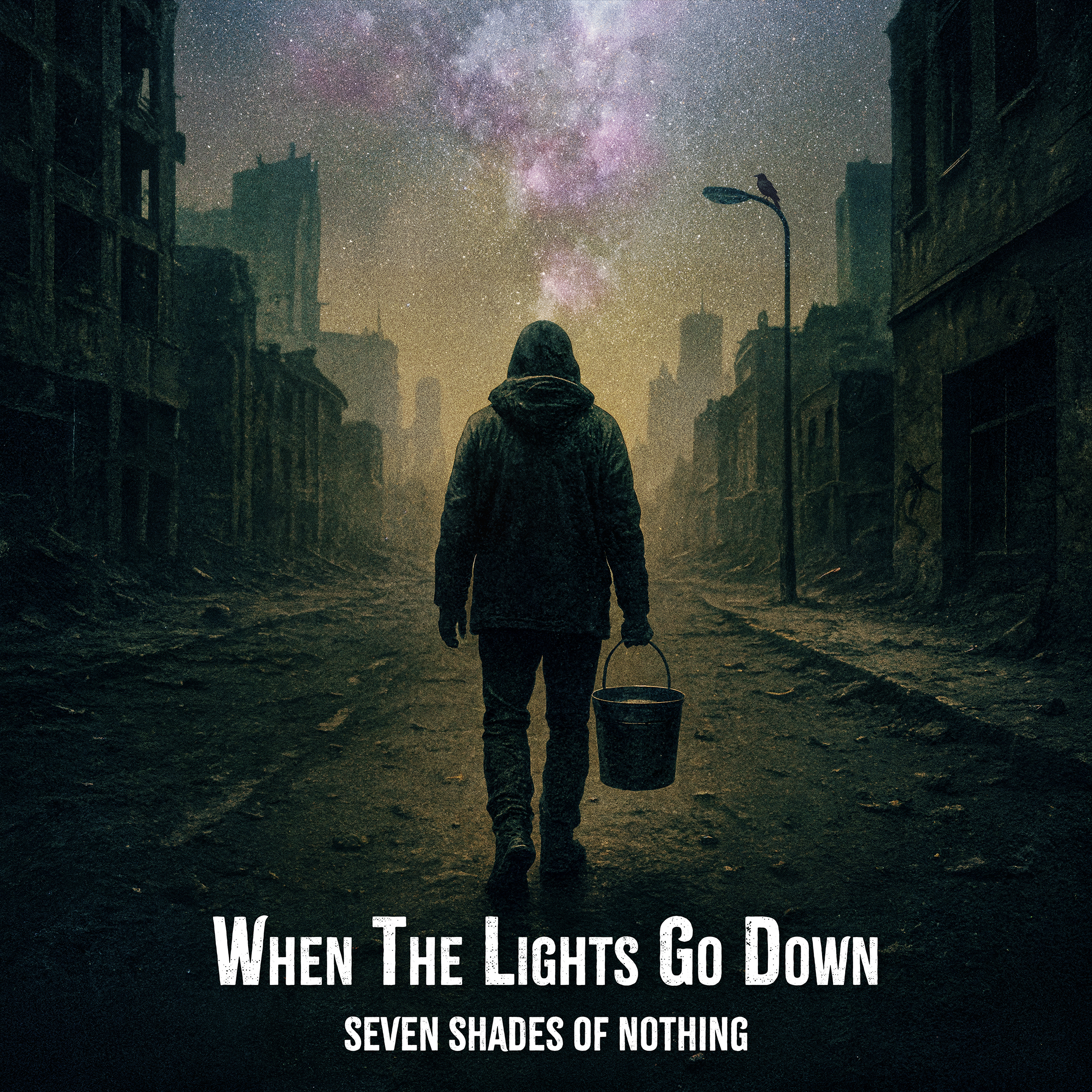
The track occupies that fertile ground between alternative rock and indie sensibilities, but Cole's background in film and post-production infuses every moment with a cinematic weight that elevates it beyond genre constraints. His journey from mainstream fodder—Michael Jackson, Phil Collins—to the industrial revelations of Nine Inch Nails and Ministry is audible throughout, though filtered through a more sophisticated lens than mere influence-peddling might suggest.
What makes this particularly compelling is Cole's admission that the original recording threw "the kitchen sink" at the arrangement before he learned to strip back, to chisel rather than simply build. The final result bears the hallmarks of this hard-won restraint: Troy McCosker's mastering brings clarity without sacrificing the essential heaviness, while the layered production serves the song's apocalyptic narrative rather than overwhelming it.
The accompanying visual treatment—filmed across the Mornington Peninsula's abandoned spaces—reinforces the track's central metaphor of societal collapse and natural reclamation. Cole's background in autism and ADHD, openly discussed in the press materials, manifests not as limitation but as obsessive attention to detail and an outsider's perspective on a world seemingly intent on drowning out its own beauty.
"When The Lights Go Down" functions both as personal catharsis and broader social commentary, finding strange comfort in the idea of silence following chaos. The production walks a careful line between the atmospheric and the immediate, between the cinematic scope Cole clearly favours and the direct emotional impact required of contemporary alternative rock.
For a project still building toward live performance, Seven Shades of Nothing demonstrates remarkable artistic coherence. Cole's vision of creating a "cinematic world with each single" toward the eventual debut album *Two For Joy* feels less like marketing speak and more like genuine artistic mission. The Shadow Rebellion community forming around themes of "awakening, resistance, and finding beauty in the dark" suggests an artist who understands that meaningful music requires more than just songs—it demands a complete world to inhabit.
This is music for the disillusioned who refuse to surrender hope entirely, for those who find solace in imagining a quieter world where stars might finally be visible again. Cole has crafted not just a song but a meditation on collapse and renewal, wrapped in production sophisticated enough to reward repeated listening yet immediate enough to grab hold on first encounter.