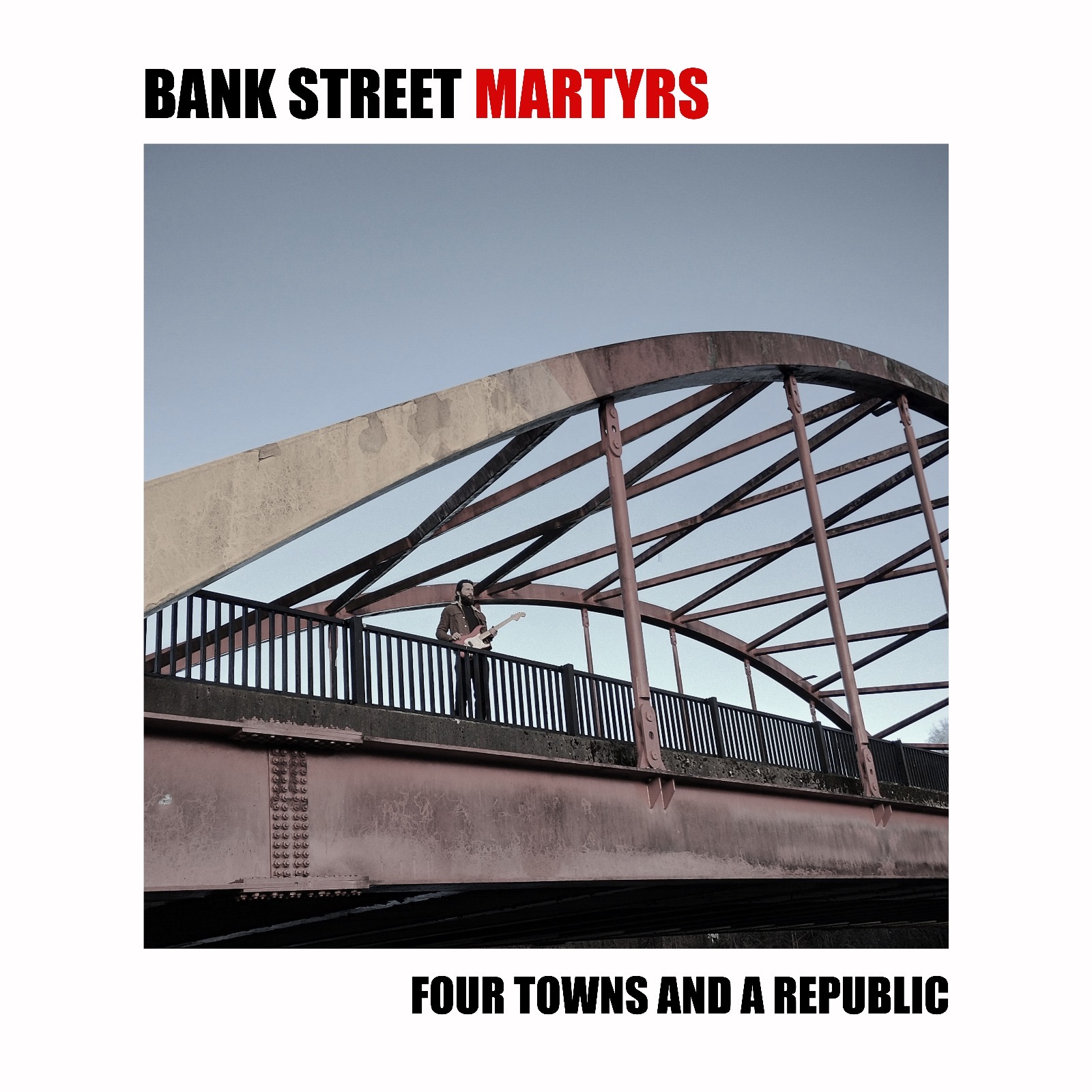
From the opening title track's rallying cry for democratic renewal to the elegiac closer "Mary Carmichael and Jenny McBride," this is music rooted firmly in place yet reaching beyond parochialism. This threesome operates with remarkable chemistry: Jack James Mullen's vocals carry the grit of shipyard steel and the warmth of pub hearths, while Andrew Marsland's music and vocals create arrangements that feel both intimate and expansive—like overhearing conversations in Alexandria's cafes that somehow speak to universal truths.
Ian Morris Retson's lyrics deserve particular praise for their specificity without insularity. "Ballad of a Vale Man" charts the characters of 1970s Scotland with affectionate precision, while "Main Street Steeple" transforms local architectural loss into broader meditation on heritage under threat. The band understands that the particular often illuminates the universal better than grand gestures ever could.
Musically, Bank Street Martyrs occupy compelling territory between folk-rock traditionalism and contemporary urgency. "Three Stripes to the Wind" showcases their range with jazz-inflected passages that feel organic rather than forced, while "Excerpts from the Great Escape" builds tension through its extended runtime without losing narrative focus. Marsland's musical foundation drives everything forward with the steady pulse of working life, never flashy but utterly dependable.
"Home to the Power of Two" offers the album's most tender moment, exploring long-distance love with genuine emotion rather than sentiment, while "Kiss Me Quick Don't Let Me Go" finds romance amid the everyday geography of Cafe La Fontaine. These aren't songs about escaping small-town life but about finding meaning within it.
The closing "The Old Vale Slips Away," enhanced by Shirley McAlpine's harmony vocals, provides the album's most affecting moment. Here the River Leven becomes both witness and metaphor, watching towns change while acknowledging that beauty persists even as particular forms fade. It's a sophisticated response to decline that avoids both nostalgia and despair.
At 59 minutes, the album occasionally feels its length, particularly during some of the longer tracks where musical ideas could be more tightly focused. Yet this expansiveness also allows space for the band's storytelling to breathe, for characters to develop across verses rather than being sketched in shorthand.