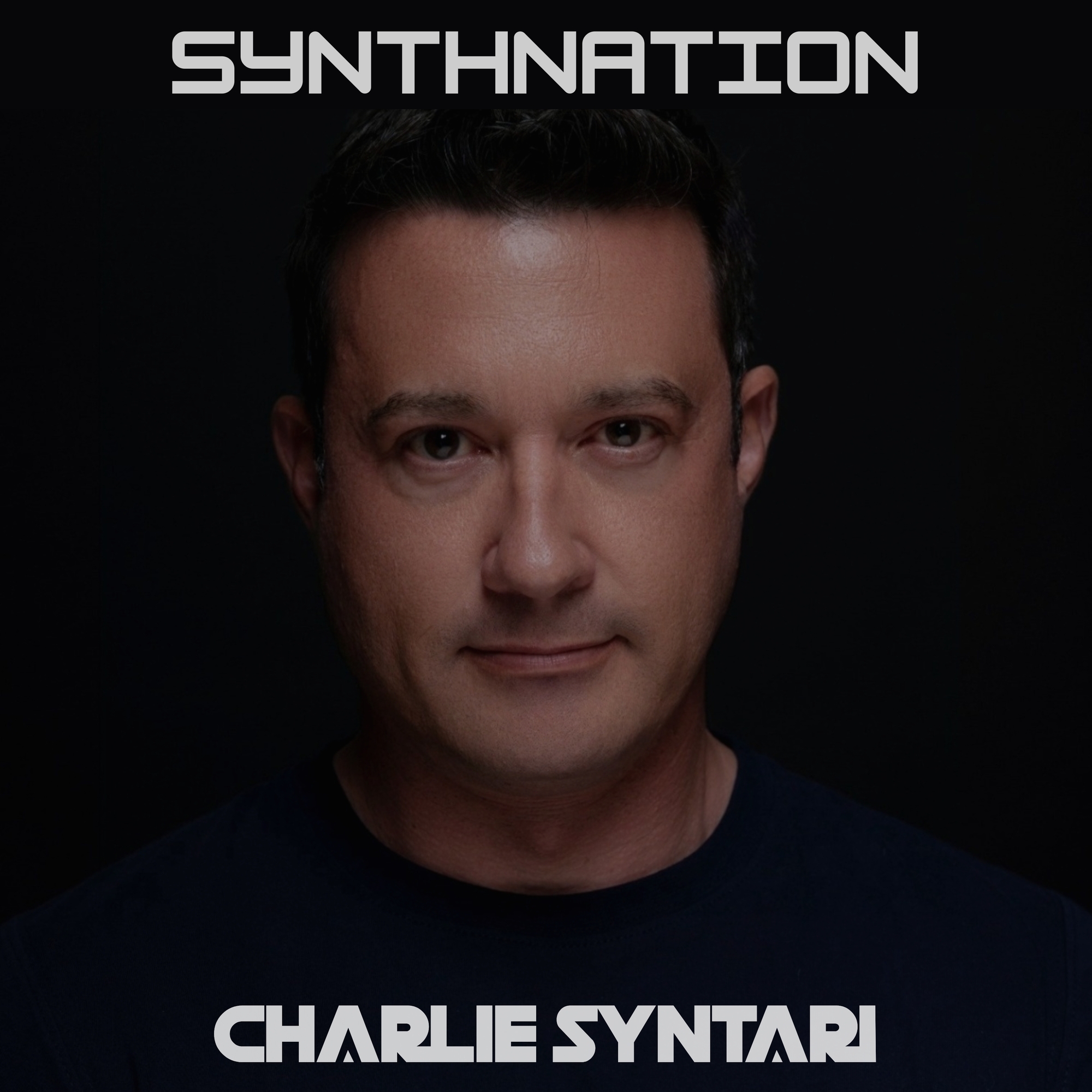
The album opens with "Hey, Sister", a track that immediately establishes Syntari's thesis: this is dance music that refuses to abandon its past while embracing its future. The opening track pairs euphoric major-key melodies with lyrics that speak to deeper human connections, creating an immediate sense of intimacy within the dancefloor framework. It pulses with the kind of urgent melodicism that made the late '90s and early 2000s such a fertile period for electronic music, yet its production bears the sophisticated sheen of contemporary technique. It's a bold statement of intent, suggesting that emotional resonance and physical movement need not be mutually exclusive.
Syntari's classical training reveals itself throughout the album's 12 tracks, not through ostentatious displays of technical prowess but in the careful architecture of his compositions. "My Desire" unfolds with the patience of someone who understands that true emotional impact comes from restraint as much as release. The progressive house elements he weaves into his commercial dance framework create moments of genuine transcendence, particularly during the track's soaring middle section where synthesised strings dance around a relentless four-four pulse.
The album's emotional core lies in its exploration of dichotomy. "Memories '24", a reworking of his breakthrough 2021 single, finds the perfect balance between nostalgic reverence and contemporary innovation, while "Calamity" finds beauty in darkness, its minor-key progressions creating space for introspection amid the dancefloor imperative. This balance between light and shadow reflects Syntari's stated desire to create music that serves as both escapism and emotional catharsis.
Perhaps most intriguing is his reimagining of Intermission's 1993 classic "Piece of My Heart". Rather than merely updating the original with contemporary production, Syntari deconstructs and rebuilds the track, maintaining its essential DNA while grafting on his own melodic sensibilities. It's a masterclass in how to honour source material while making it entirely one's own.
The album's production deserves particular praise. Each track feels spacious yet intimate, with Syntari demonstrating an intuitive understanding of how to create movement within electronic music's inherently static foundation. His use of the synthesiser—the instrument that gives him half his stage name—is both respectful of its legacy and innovative in its application. The Atari gaming console that sparked his childhood fascination with digital sound finds its echo in the album's playful approach to sonic texture.
'SynthNation' succeeds because it understands that effective dance music must operate on multiple levels simultaneously. It must move the body, certainly, but it must also engage the mind and touch the heart. Syntari achieves this through his commitment to melody—not as mere ornamentation, but as the emotional core around which everything else revolves.
What emerges is a portrait of electronic music as both forward-looking and deeply rooted in its own history. Syntari's 'SynthNation' doesn't revolutionise dance music so much as it reminds us why we fell in love with it in the first place: its ability to transform the mechanical into the magical, the repetitive into the transcendent, and the communal into the deeply personal.
For a debut album, 'SynthNation' displays remarkable maturity and vision. It suggests that Charlie Syntari has not merely arrived but has something genuinely important to say about where electronic music might go next. The future, it seems, sounds remarkably like the past—but better.