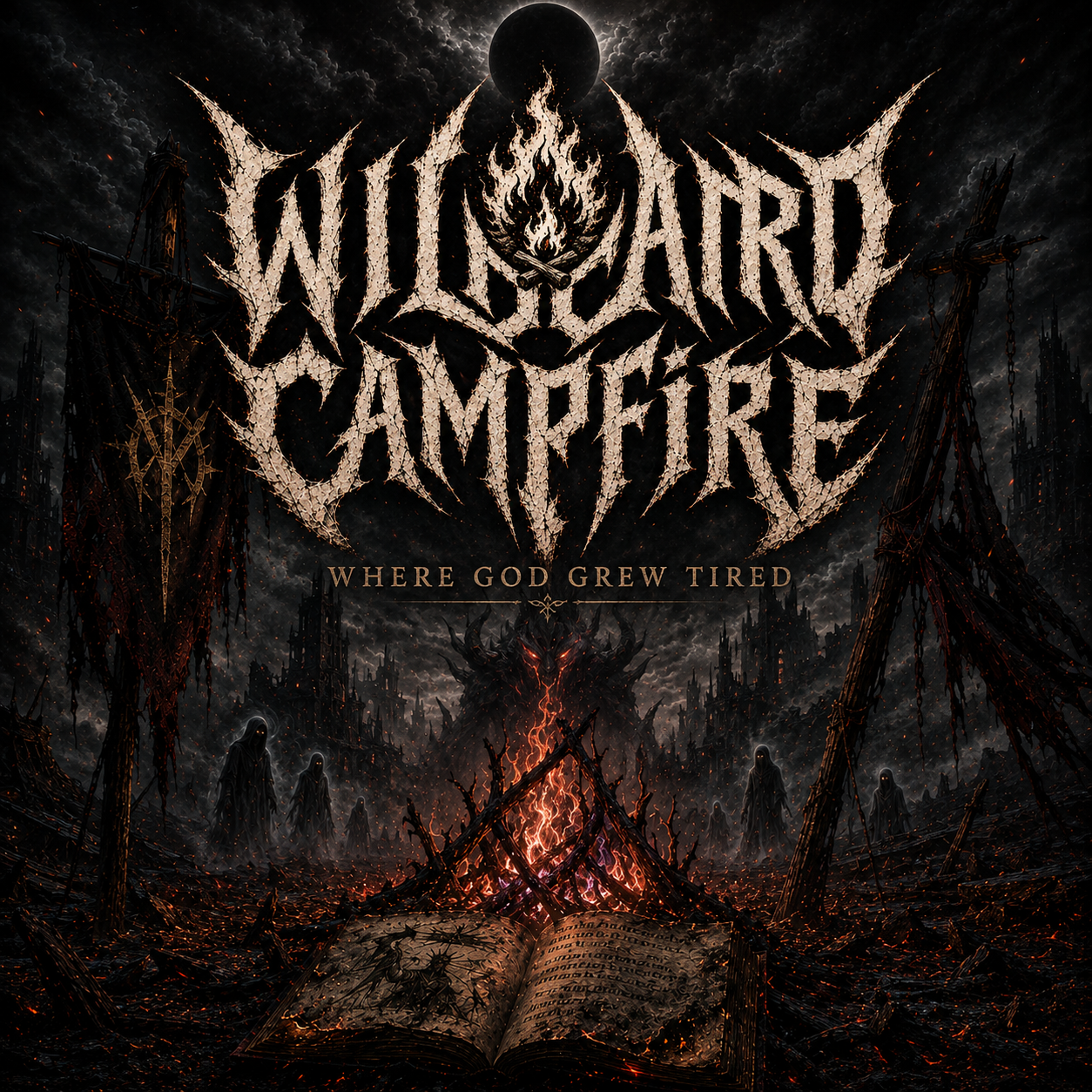
The sound is heavy and wide at once. Melodic metalcore supplies the hooks, djent supplies the mechanical low-end menace, and deathcore bares its teeth when the story turns vicious. Post-metal haze and orchestral swell give the whole thing a Cinemascope sheen. Opener "The Beast With My Name" sets out the terms, a meditation on power devoured by the fear and hatred that fed it. Burla knows the riff is a narrative device as much as a weapon, and he deploys breakdowns the way a good director deploys a cut: sparingly, and only once the tension has been properly wound.
The backbone is "The Ashen Gospel", a three-part suite scattered through the running order like shrapnel. "Before the Banners Burn" lands at just over seven minutes and plays the long game, all gathering dread and the smell of paraffin. "When the Banners Burn" delivers the conflagration its title promised. The closing title track, a full seven minutes, brings the old world down with the grave dignity of a cathedral roof collapsing in slow motion. Sequencing the arc out of order was a bold gamble, forcing the listener to assemble the chronology like an archaeologist brushing dust from a shard. It pays off handsomely. The album rewards a second spin, and a third, in a way most metal records can only dream of.
Then comes the mischief. "Khinkali Inferno" is the album's great left turn, a feral, cheerful stop at a table between battles where dumplings and human warmth briefly hold the apocalypse at bay. "The Legend of the Shanenigator" goes further, converting domestic chaos into gloriously daft folklore. Lesser bands would have wrecked the mood with such detours. Here they are the point. War, the record insists, is not confined to battlefields. It lives in kitchens and bedrooms and in the stories we inherit, and a bit of black comedy is how the survivors stay sane. The jokes make the grief land harder.
The quieter, nastier tracks hit hardest. "Paradise Has Walls" turns social and religious pressure into an intimate siege, claustrophobic where its neighbours are vast. "Shackles of Blood" follows violence after it has moved inside a single person, and "The Ghosts of My Past" gives guilt and trauma six and a half minutes to do their patient work. These songs keep the album from floating off into mere spectacle. Behind every collapsing empire stands a bruised individual, and Burla never loses sight of him.
A word on method, since the press notes are admirably upfront about it. Burla writes the riffs, lyrics, melodies and structures himself, and generative AI is used at the performance and production stage under his direction, followed by editing, arrangement and mastering. Purists will bristle, and the debate will rumble on. But the album's coherence of vision, its running motifs and its sense of a single mind steering the wreckage all suggest an author firmly in command of his tools. The tools serve the songs, not the other way round.
What Wildcard Campfire has built is rare: heavy music with a point of view, an imagination, and a pulse. *Where God Grew Tired* is vast, funny, bleak and strangely tender, the sound of a faceless project finding its voice among the ashes. Stand well back and turn it up.