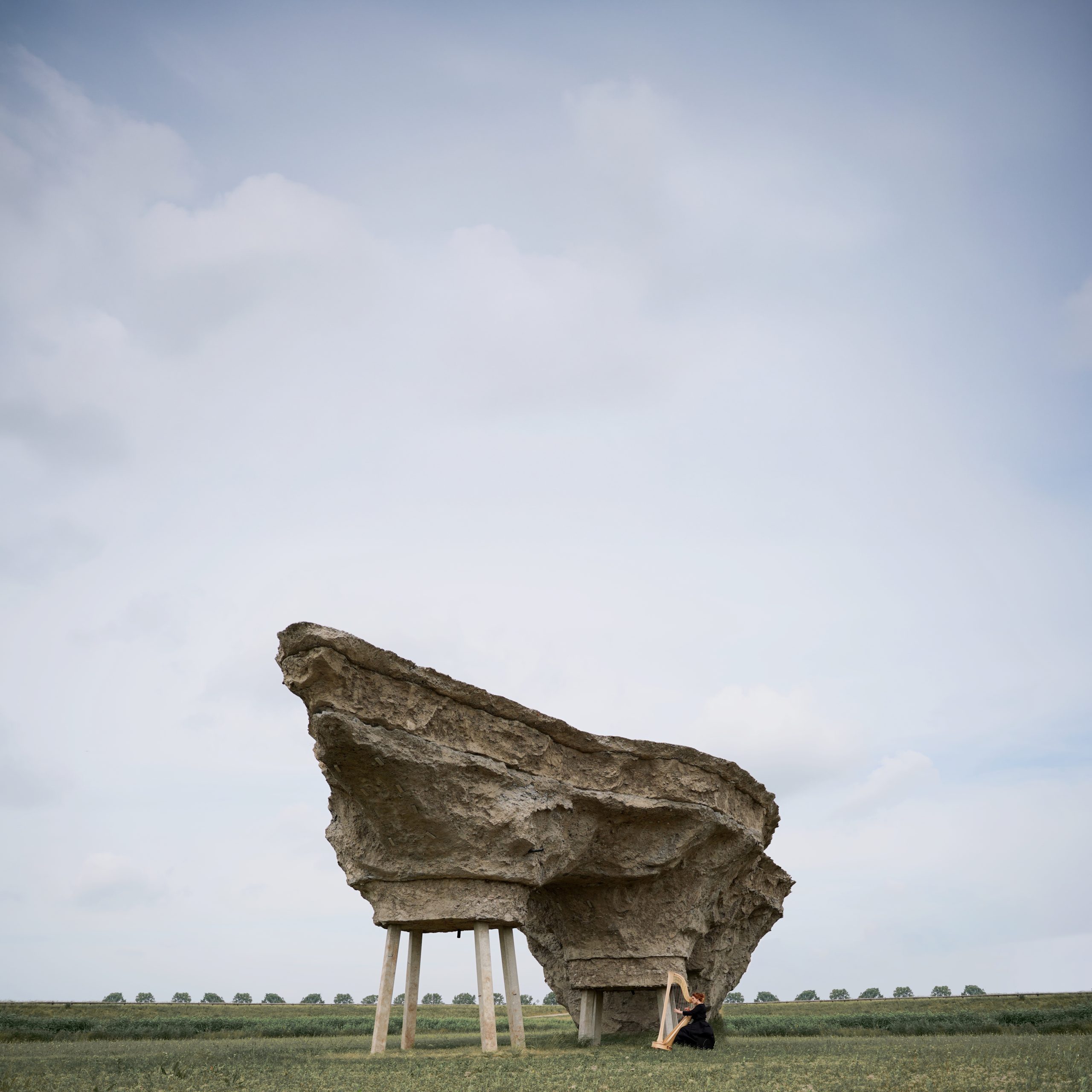
The bones of the piece began life as a solo harp recording, and you can still feel that origin underneath everything — a kind of skeletal honesty that survives even after producer Thijs de Melker has spent considerable time dressing it up. The original take was stretched, layered, spatially smeared and shot through with electronic haze until it settled somewhere between ambient music, contemporary classical writing and the more austere end of sound art. That's a crowded intersection to stand at, and plenty of records collapse under the weight of straddling three genres at once. This one doesn't collapse so much as dissolve, deliberately, the way sediment dissolves into water.
The harp itself is the giveaway. Plucked strings have a way of insisting on their own physicality — wood, gut, fingertip — and Vanschothorst never quite lets that insistence get smothered, even as de Melker pulls the recording further from anything resembling a stage. Notes arrive and then refuse to leave properly, hanging in a kind of reverberant fog that suggests an instrument being slowly submerged. The press notes call this an "imagined underwater sound world," and for once the marketing copy undersells the experience rather than oversells it. Listening feels less like imagining water and more like discovering you're already standing in it.
What separates this from the glut of ambient-adjacent records currently trading on stillness as a personality trait is restraint with teeth. Vanschothorst and de Melker resist the temptation to swell the piece into anything resembling a climax. The harmonies evolve, almost imperceptibly, the way a landscape evolves — not through drama but through accumulated erosion. There's a confidence in that refusal, a willingness to trust silence and near-silence to do work that louder records would hand to a string section or a drop.
The Gramsma connection isn't incidental dressing either. Land art has always had a slightly awkward relationship with sound — sculptures don't naturally lend themselves to soundtracks, and composers who attempt the translation often end up illustrating rather than responding. Vanschothorst sidesteps illustration almost entirely. Rather than scoring the sculpture, she seems to have asked what memory does to a hole in the ground over years of tide and weather, and then tried to play that question on an instrument built for entirely different purposes.
It's a slight piece, in the sense that nothing here demands to be played twice in a row at volume. But slightness, deployed this precisely, is its own kind of nerve. "RIFF" doesn't ask to be remembered loudly. It asks to be returned to, the way you return to a place that changed shape the last time the water moved through it — uncertain exactly what you'll find, certain only that it won't be quite what you left.