The lyrics are penned by **Ajay Sahaab** — a poet of considerable modern reputation whose Alfaaz Aur Awaaz concert series has cultivated a devoted global audience, accumulating over 600 million views across platforms. Between 2024 and 2026, fifty-five of Sahaab's songs have trended across streaming services, marking a sustained and extraordinary cultural resonance. He writes with the classical instinct for the compressed image: a firefly measuring itself against the sun, time rendered as sovereign and merciless, a naïve heart navigating the cartography of love and loss. These are not novel conceits, but then the ghazal was never about novelty. It is about depth of feeling, the millionth utterance of heartbreak somehow piercing as freshly as the first. Sahaab understands this covenant, and so, crucially, does Limaye.
*Nadaan Dill* (Innocent Heart) opens the collection with disarming gentleness. Limaye's voice enters without performance anxiety — no theatrical throat-clearing, no self-conscious announcement of arrival. The tone is conversational, almost confessional, before it gradually opens into something more expansive. Composer Sachin Limaye and arrangers the Leo Twins — Haroon Leo and Sharoon Leo — have constructed a soundscape of admirable restraint; strings that suggest rather than insist, percussion that keeps classical time without enslaving the mood to it. The arrangement serves the poetry rather than competing with it, which in contemporary Sufi and ghazal production is less common a virtue than it ought to be.
*Sochiye* (Thinking) is the EP's most intellectually alert track. Where *Nadaan Dill* draws on the emotional register of innocence, *Sochiye* presses into something more troubled and contemplative — the space where thought becomes a kind of wound. Limaye demonstrates here that she possesses not merely technical facility but interpretive intelligence. She understands when to withhold ornamentation, when a plain phrase will cut deeper than any embellishment. Certain passages have the quality of a held breath; you wait for resolution that arrives, when it does, with quiet devastation.
*Ye Waqt Ka Lagta Hai* (The Atrocity of Time) closes the project on its most philosophical ground. Time as oppressor, as the force that makes fools of the arrogant and ruins even love, is a theme the ghazal tradition has returned to obsessively — from Mir to Faiz to Gulzar. The challenge for any contemporary artist is to make that meditation feel lived rather than inherited. Limaye meets it. Her phrasing in the final movements of this track carries the particular sadness of someone who understands the words not academically but viscerally.
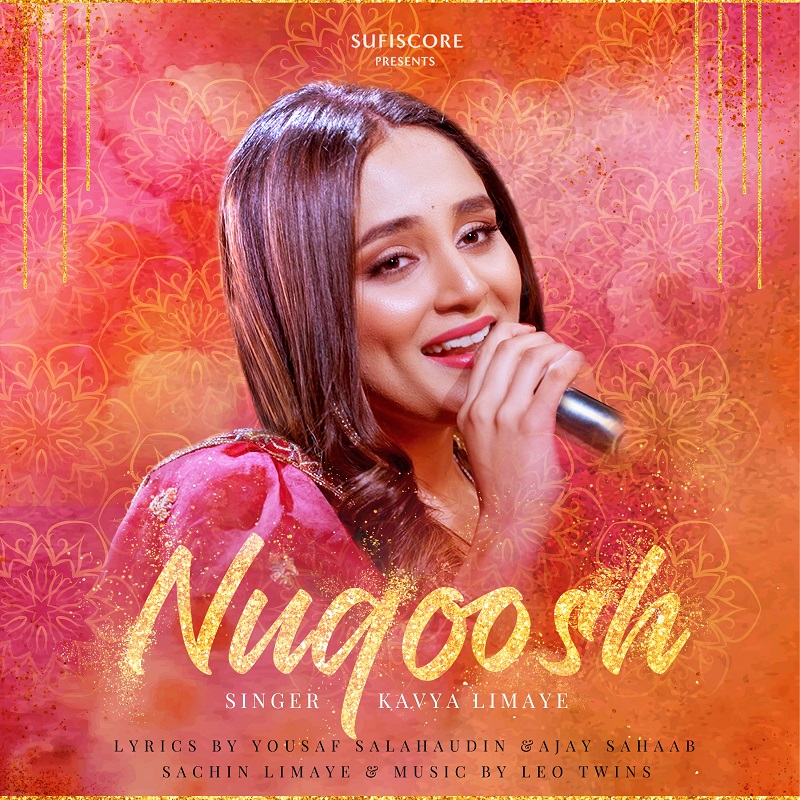
Released by **Sufiscore** — the London-based platform with over 12.9 million subscribers built on Sufi and classical music — *Nuqoosh* finds an ideal home. Sufiscore's curatorial reputation, having previously hosted the likes of Atif Aslam, Hariharan, Vishal Mishra, and Pratibha Singh Baghel, lends the project genuine institutional weight. The alignment feels entirely appropriate. This is not a crossover bid or a fusion exercise hedging its cultural bets. It is a sincere work of classical inheritance, made with craft and emotional seriousness, and released ahead of Limaye's performance on 22nd March 2026 at the Royal Albert Hall, London, alongside the legendary Rahat Fateh Ali Khan — a billing that speaks to the swiftness of her rising profile.
What *Nuqoosh* ultimately offers is the particular pleasure of watching a young artist locate her own gravity. The imprints of the title are not merely those left by memory and time on the human heart; they are the marks Kavya Limaye is beginning, with quiet confidence, to make upon a tradition that rewards exactly this kind of devotion.
*Nuqoosh is available now via Sufiscore.*