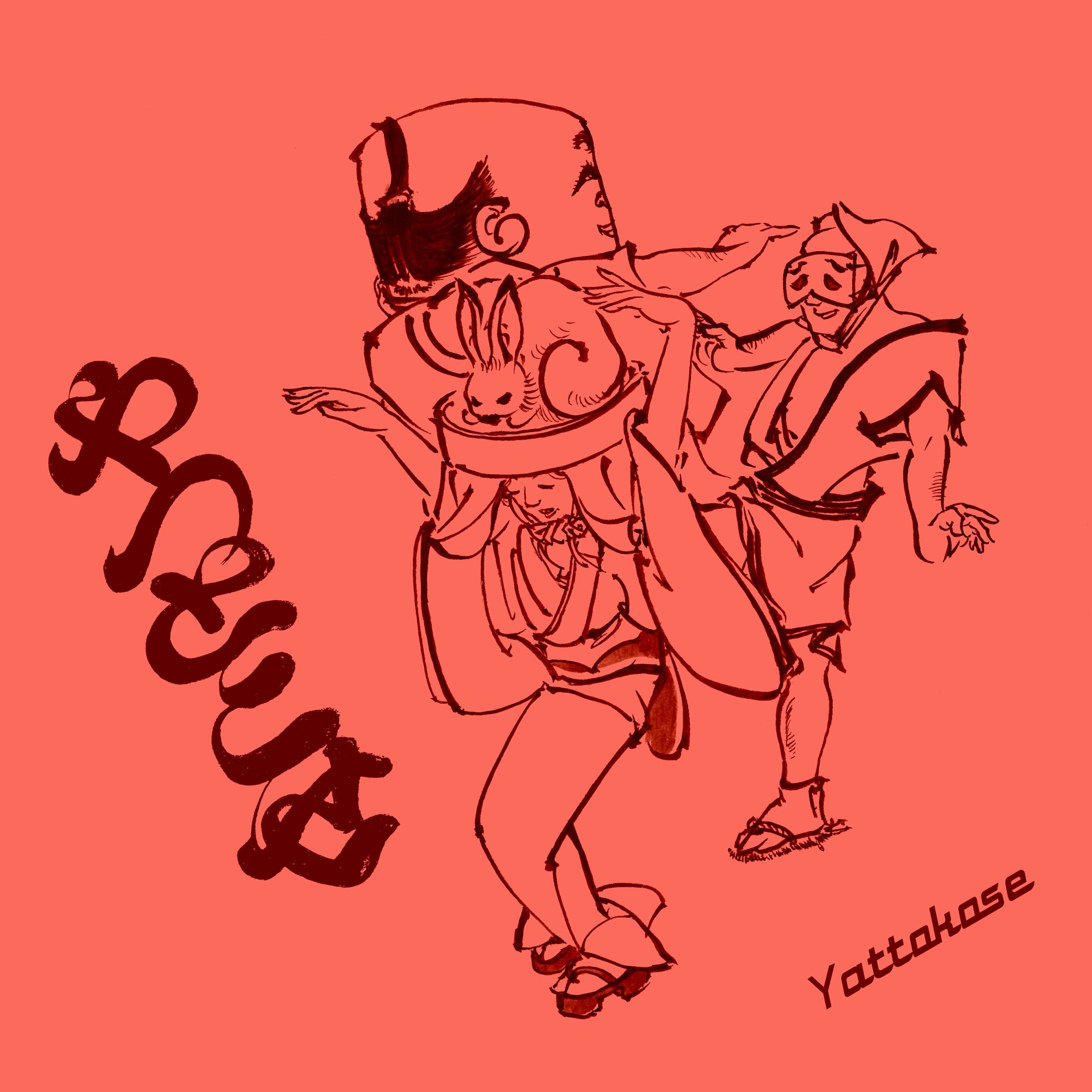
Producer Agatha, who has shepherded Nakanishi's recorded output since 2022's revelatory *Hinano Iezuto*, constructs a sonic landscape that feels both utterly improbable and entirely inevitable. Motown horn sections—brassy, urgent, propulsive—collide with Ennio Morricone's desert expanses, creating a liminal space where Stax Records might have set up shop in Monument Valley. The arrangement refuses to genuflect before either influence; instead, it conscripts them into service of something stranger and more particular. When Suzumeno Tears arrive on the chorus, their voices don't so much harmonize as haunt, adding yet another temporal layer to music already operating outside conventional chronology.
Kohsuke Nakamura's engineering renders this controlled chaos with remarkable clarity. The double Hattori rhythm section—Masatsugu on drums, Masanori on contrabass—provides a foundation that's simultaneously loose and locked, echoing the improvisatory spirit that Nakanishi absorbed through years with Monogatari Uchūno Kai, the Gōshū Ondo collective that incubated his approach. Jun'ichi Kamiunten's saxophones toggle between alto and baritone, occupying the space where tradition and innovation cease to be opposing forces.
What Nakanishi grasps—and what makes his work so bracingly contemporary—is that vernacular culture was never static. The songs he mines weren't preserved; they were *used*, altered by circumstance and occasion, responsive to whoever was singing and why. His nearly two decades immersed in bon odori festivals, those communal summer observances for the dead, taught him that folk practice is fundamentally protean. The difference between preserving and participating isn't semantic—it's the difference between taxidermy and ecology.
The spaghetti western flourishes might initially scan as postmodern pastiche, but they function as something more fundamental. Morricone's scores were themselves acts of cultural translation, Italian soundtracks for American myths shot in Spanish locations. That Nakanishi would hear resonance between those cinematic vistas and Sado Island's traditional repertoire suggests an ear attuned to how music moves through time and space, picking up accretions and associations like a river stone gathering moss.
His visual presentation—kimono paired with heart-shaped sunglasses—could easily tip into kitsch or orientalist self-exoticization. But Nakanishi's deep engagement with grassroots performance culture and his work with marginal musical traditions across Japan and East Asia inoculates the project against superficiality. The aesthetic isn't costume; it's argument, a insistence that vernacular expression can be simultaneously playful and profound, historically grounded and radically present-tense.
"Yattokose" inaugurates a five-month sequence of singles preceding Nakanishi's second album, suggesting an artist working at full creative velocity. The track doesn't resolve the tensions between its component parts—the sacred and profane, the local and global, the ancient and modern. Instead, it amplifies them, trusting listeners to navigate the dissonance. This is music that understands that keeping traditions alive means refusing to embalm them, that the only authentic relationship to the past is one that acknowledges its fundamental strangeness to the present.
Nakanishi and Agatha have conjured something genuinely rare: a record that sounds like nothing else while remaining legible, experimental without being exclusionary, rooted in tradition while allergic to conventionality. It's folk music for a world where folk has always been a verb, not a noun.