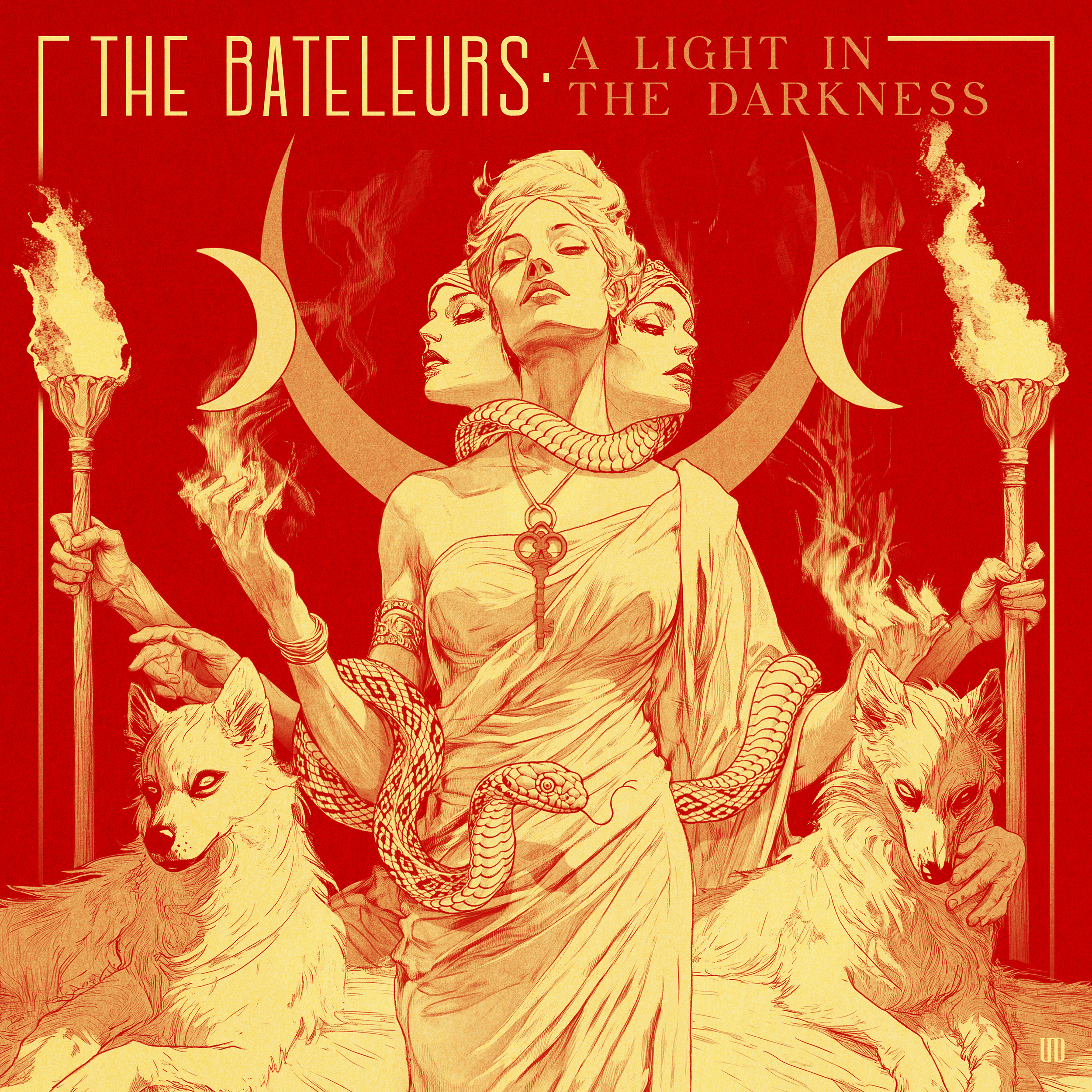
Recorded across three different studios in early 2025, with sessions deliberately split to capture the optimal sonic characteristics of each space, this is an album that wears its analogue credentials proudly. Produced by the band themselves and mixed by bassist Ricardo Dikk, the recording eschews the digital safety nets that have become industry standard – no auto-tune, no time correction, no extensive editing. The result carries the unmistakable stamp of real humans playing real instruments, with all the glorious imperfections and raw energy that entails. When the rhythm section locks into a groove, you can hear the room breathing around them.
The production philosophy pays dividends across the album's running time. The guitars – whether Galrão's lead work or the rhythmic underpinning – possess genuine heft and grit, the kind of tone that only emerges when amplifiers are pushed hard and performances are captured with minimal interference. The drums hit with visceral impact, the bass rumbles authentically through the lower frequencies, and the vocals convey genuine emotion rather than digitally perfected approximations thereof.
The band has wisely augmented their core quartet with strategic guest appearances that enhance rather than overwhelm. Tiago Maia's slide guitar adds swampy authenticity to proceedings, whilst Nuno Louro's Hammond organ work conjures the spirit of classic British blues-rock without descending into pastiche. João Colaço's drumming on two tracks provides subtle shifts in dynamic approach, and the CD-only bonus track featuring Ruben Monteiro on Irish whistle and Niklos Pavliidis on violin suggests a band comfortable exploring beyond their blues-rock foundations.
The advance singles "For All To See" and "A Price For My Soul" have already demonstrated the band's evolution. The former showcases Galrão's ability to balance technical prowess with melodic sensibility, his solos serving the song rather than merely displaying facility. The latter reveals a band grappling with weightier lyrical themes – the transactional nature of artistic ambition, perhaps, or the compromises demanded by the pursuit of one's craft.
Throughout the album, The Bateleurs demonstrate a thorough understanding of dynamics and pacing. They comprehend that effective blues-rock isn't simply about constant intensity but rather the intelligent deployment of tension and release. Songs build with patience and purpose, allowing grooves to establish themselves before the band unleashes their full force. When they do choose to open the throttle, the impact feels earned rather than arbitrary.
The Seventies influences remain readily apparent – echoes of Free, Humble Pie, and early Zeppelin shimmer through the riff structures and vocal deliveries – yet The Bateleurs filter these touchstones through distinctly Portuguese sensibilities. Their regional twist, as they term it, manifests not in overt folk elements but rather in a certain melancholic undertow, a darkness at the edges that distinguishes their approach from straightforward revivalism.
Recent live performances, including their opening slot for Dirty Honey at Lisbon's Coliseu, suggest a band hitting their stride. Reports indicate that the new material translated powerfully to the stage, the raw recording approach presumably serving them well in live contexts where polish counts for less than conviction and power.
The Bateleurs have delivered a confident second album that builds intelligently upon their debut's foundation. The lineup change has clearly energised rather than destabilised them, and their commitment to analogue authenticity results in a record that sounds alive in ways that much contemporary rock simply doesn't. Released through Spanish label Discos Macarras, with vinyl editions available for those who appreciate proper formats, A Light In The Darkness confirms The Bateleurs as one of the more promising acts working the blues-rock seam. They've earned their place on bigger stages.