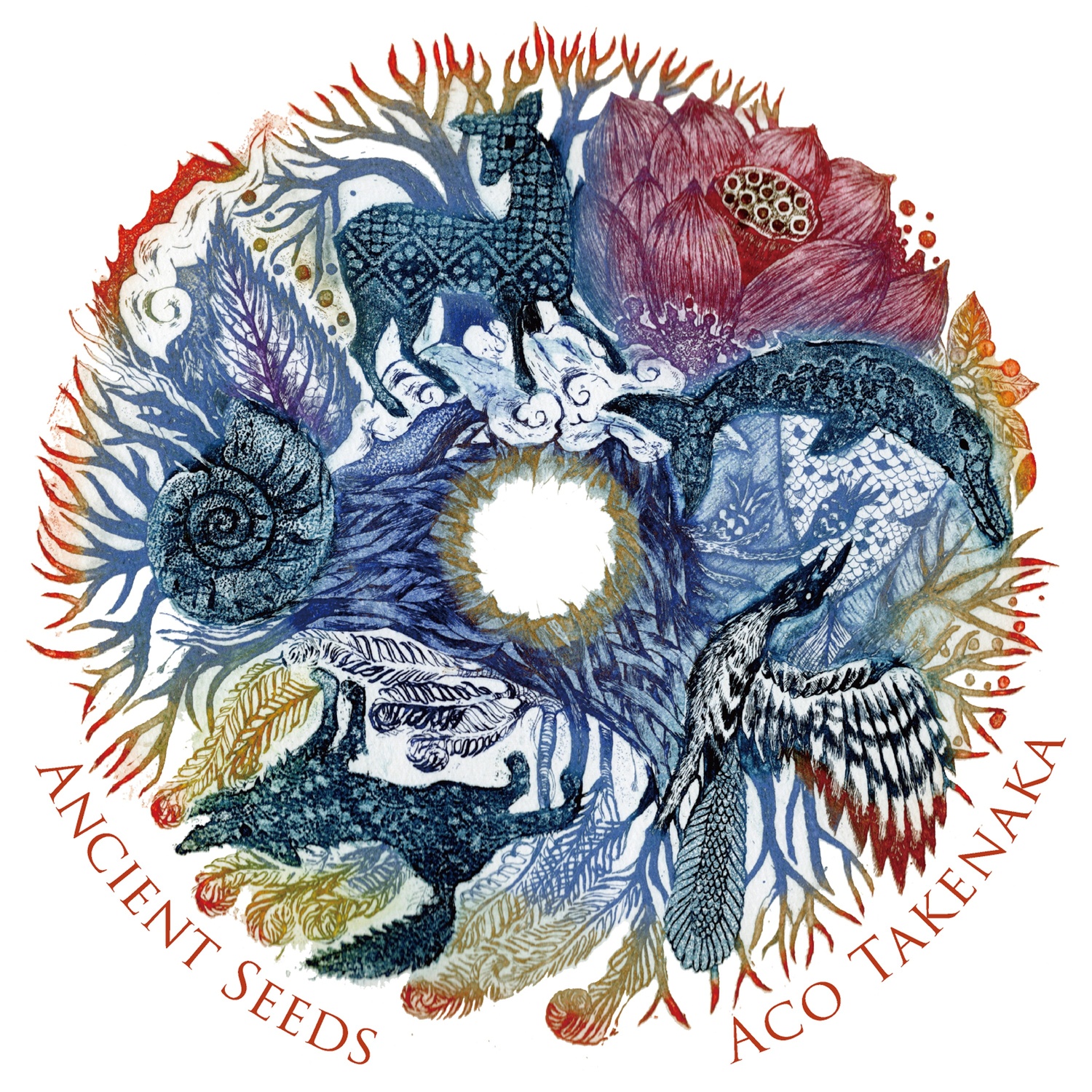
The album's central conceit is both simple and profound: to gather chants and mantras from disparate cultures—Japan, Tibet, India, Africa, Native America—and present them not as museum pieces but as living, breathing entities capable of speaking to contemporary listeners. This could easily have collapsed into cultural tourism or well-intentioned pastiche, yet Takenaka's approach demonstrates a rigorous respect for her source material whilst allowing herself the freedom to reimagine.
Her voice, often described as "seven-coloured" and shamanic, proves the album's most compelling instrument. On tracks like "Om Mani Padme Hum" and "Ra Ma Da Sa", she layers her vocals into dense, shimmering textures that recall both ancient ceremonial practice and the more adventurous corners of fourth-world music. The effect is hypnotic without being soporific, meditative without lapsing into background ambience.
O'mori's arrangements provide crucial scaffolding. His background in commercial and soundtrack work might suggest a certain slickness, yet here he demonstrates admirable restraint. The production favours space and resonance over clutter, allowing the traditional elements—Ko Ishikawa's haunting sho on several tracks, Hiroki Okano's Native American flute, Masashi Yamaguchi's jinlei—to breathe and interact organically. Producer Joss Jaffe's influence, with his established practice of melding mantras and Eastern philosophy with contemporary forms, helps ensure the album never feels trapped in reverence for the past.
The opening track "Ame Kuni" establishes the album's methodology immediately: traditional Japanese vocalisations meet subtle electronic treatments and carefully chosen acoustic instrumentation. Percussionist Tamao Fuji's contributions throughout prove invaluable, providing rhythmic grounding that connects disparate traditions without flattening their individual characters.
Standout moments arrive throughout the album's generous running time. "Wani Wachi Elo" demonstrates how effectively Takenaka can channel Native American vocal traditions whilst maintaining her own artistic identity. The Yoruba-influenced "Oxum" and "Iyalawa" pulse with a vitality that avoids folkloristic reproduction, instead finding genuine emotional resonance in their melodic structures.
The longer pieces—"Ra Ma Da Sa" stretching beyond six minutes, "Lokah" approaching six and a half—reveal Takenaka's confidence in her material. These extended compositions develop slowly, building through repetition and subtle variation rather than conventional verse-chorus structures. The hypnotic quality could test patience, but more often it rewards sustained attention, revealing layers of detail and nuance.
What Takenaka achieves here transcends mere eclecticism. Spanish radio host Jordi Garcia's observation about "music as therapeutic option" points toward the album's deeper ambitions. This isn't simply music that borrows from healing traditions; it attempts to function as healing music itself, reconnecting listeners with what Takenaka identifies as "the sacred relationship between sound, nature, and soul."
Whether one accepts such metaphysical claims depends largely on temperament, but the music itself requires no special pleading. *Ancient Seeds* succeeds on purely sonic terms: beautifully recorded, thoughtfully arranged, and performed with evident dedication and skill. Takenaka's belief that "the sound of the deepest truth should resonate with people across cultures" finds convincing expression across these eleven tracks.
The album's commercial reception—topping Music Media Directory's streaming charts in its first week—suggests an audience hungry for music that engages seriously with tradition whilst refusing to merely replicate it. Takenaka has created work that honours its sources whilst asserting its own contemporary relevance, a considerable achievement in any genre.