The track opens with a guitar figure that could have been lifted from the Batcave circa 1982, all angular menace and deliberate restraint. Jack Gallows' production at Canal 10 Studio in Hautrage captures the band with the perfect balance of clarity and grime; you can hear every instrument distinctly, yet the whole enterprise feels subterranean, as if recorded in some forgotten bunker beneath the Ardennes. The mix allows space for each element to breathe while maintaining the claustrophobic atmosphere essential to this genre's DNA.
Dominique Nuydt's songwriting demonstrates a keen understanding of how to build tension without resorting to obvious dynamics. The arrangement, credited to Mi6 collectively, suggests a band that trusts in patience and repetition to work its dark magic. Richard Belgium's vocals carry the appropriate measure of detachment and intensity—he's not Ian Curtis, but he's clearly studied at that altar. His voice cuts through the instrumentation with a theatrical edge that never tips into camp, maintaining the fine line between dramatic and desperate.
JHell Berge's guitar work (he of Gabba Lovers and Skin Deep pedigree) provides the track's most compelling moments. His playing demonstrates restraint where others might overplay, allowing notes to decay into silence before launching the next barbed-wire riff. The influence of bands like Bauhaus and early Killing Joke lurks in the shadows here, but Mi6 avoid simple pastiche through sheer commitment to mood over nostalgia.
The accompanying video reinforces the track's themes with striking visual economy. Rather than drowning the song in literal imagery, it opts for abstraction and symbolism, letting shadows do the heavy lifting. It's a wise choice that complements rather than competes with the music's hypnotic pull.
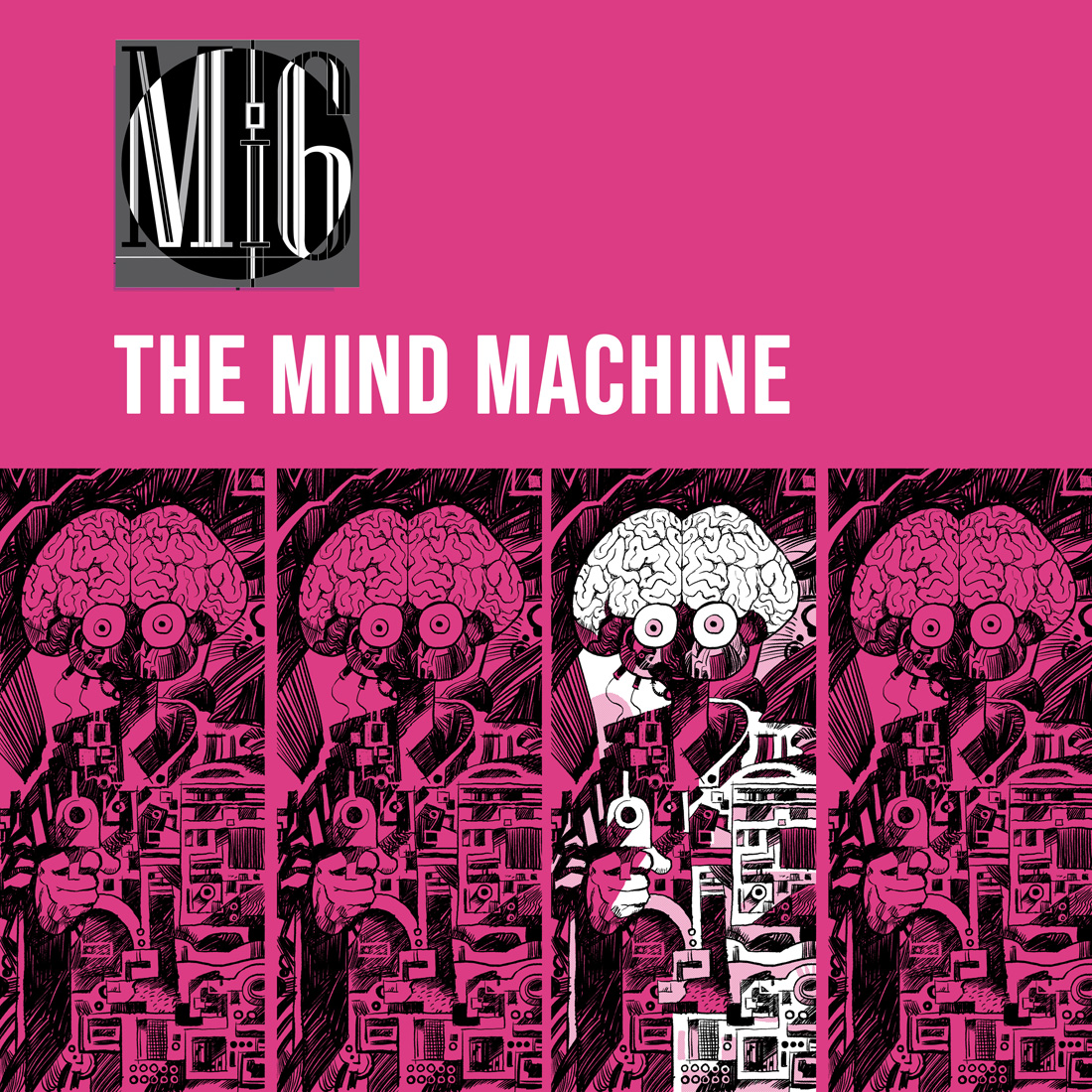
Pamancha's cover artwork deserves mention as well—the young Belgian artist has created something that captures the band's aesthetic perfectly. The design speaks to the collision of human consciousness and mechanical processes that the song title suggests, rendered in a style that feels both contemporary and timeless.
What makes "The Mind Machine" work beyond mere genre exercise is its refusal to offer easy comfort. This isn't revivalism for revivalism's sake, nor is it calculated nostalgia designed to part aging goths from their discretionary income. Instead, Mi6 sound like they genuinely inhabit this musical territory, as if the intervening decades between punk's first explosion and now simply haven't happened. Given that these musicians came of age during that fertile period—the late seventies and early eighties—their authenticity feels earned rather than assumed.
The track serves as a compelling preview of their forthcoming album "Are you listening?" and suggests that Mi6 have something substantial to offer beyond a few well-executed singles. Their promise to deliver a "knock your socks off" live experience seems less like hollow promotion and more like a genuine threat.
"The Mind Machine" won't convert anyone who finds post-punk's inherent bleakness off-putting, but for those who still believe that darkness and beauty can coexist on a dancefloor, Mi6 have crafted something worth your attention. This is music that understands its lineage without being imprisoned by it—a genuine achievement in a genre too often content with mere replication.