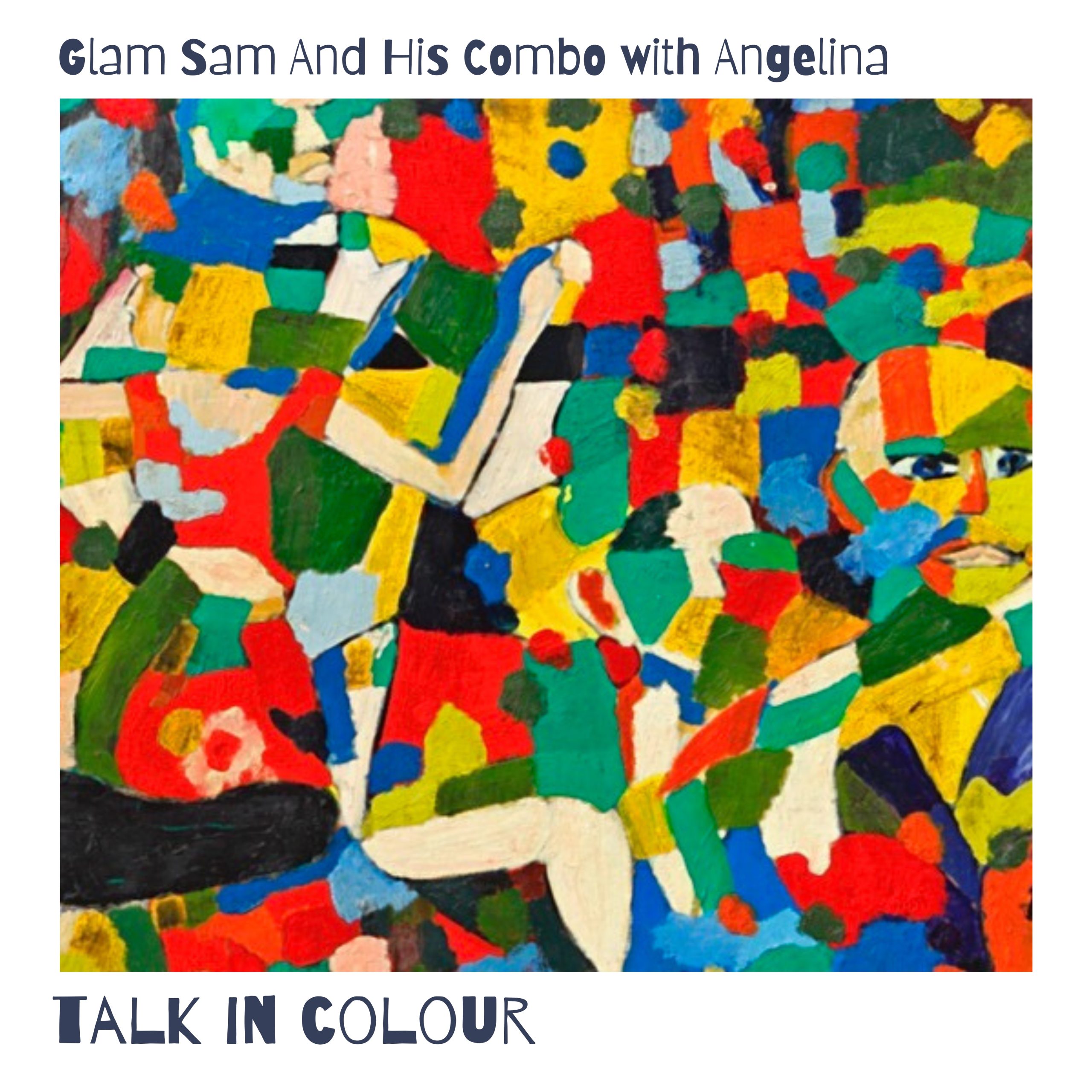
This partnership, born when Mats discovered Angelina's voice on the Monks Road Social debut LP (featuring luminaries like Mick Talbot of The Style Council and Dr. Robert of The Blow Monkeys), represents a meeting of kindred spirits across the North Sea. Their previous collaborations—"Blood Red Stone" and "Runaway Trains"—have already earned airplay on Jazz FM and Solar Radio, establishing their credentials among the cognoscenti.
The Brixton Jazz Edit opens proceedings with the languid confidence of late-night London sessions. Angelina's voice drifts between singing and speaking with the casual intimacy of pillow talk, while hypnotic guitar figures circle like smoke from forgotten cigarettes. Her delivery recalls the conversational ease of Sade's quieter moments, though with more literary ambition—the lyrics paint vivid tableaux of "incense, coffee, vinyl, and candle wax-drenched kitchen tables" that could have tumbled from a Kerouac notebook.
The Disco Jazz Explosion transforms the same narrative into something altogether more urgent. Here, freestyle piano cascades through the mix with wild abandon while the rhythm section locks into a groove that demands movement. Angelina, by her own admission "vocally drunk" on the piano's spontaneity, lets loose with the kind of exaggerated vocal performance that walks the tightrope between theatrical and authentic—and somehow manages both.
The production throughout maintains that crucial balance between polish and rawness. From his Coolsville Sounds Studios, Mats clearly understands that jazz-funk's power lies not in pristine arrangements but in the spaces between notes, the slight push and pull against the beat that makes bodies move involuntarily. His decision to present two radically different approaches to the same song reveals both ambition and wisdom—why choose between contemplation and celebration when you can have both?
Angelina's lyrics deserve particular praise for avoiding the clichéd imagery that often accompanies retro-soul exercises. The blues queen, whose solo albums have earned plaudits from Mojo and Uncut, brings genuine depth to her "exotic muse who talks in colour." Her writing maintains specificity even in its romanticism—when she describes being "smitten and spellbound," the words carry the weight of lived experience rather than borrowed mythology.
The collaboration feels genuinely symbiotic rather than producer-meets-vocalist. Mats' arrangements breathe with Angelina's phrasing, creating space for her half-spoken delivery while providing the rhythmic foundation her more explosive moments require. It's the kind of musical dialogue that suggests these two artists genuinely listen to each other—a chemistry that's perhaps not surprising given their shared background in crafting music for the warm-up party, the main party, and the after party alike.
"Talk in Colour" marks the arrival of a partnership worth watching. In a musical landscape often obsessed with either faithful recreation or radical deconstruction, Glam Sam and Angelina have found a third way—one that honours the past while speaking unmistakably to the present. The seventies may be long gone, but this music suggests their spirit of romantic idealism and sonic adventurism remains very much alive.